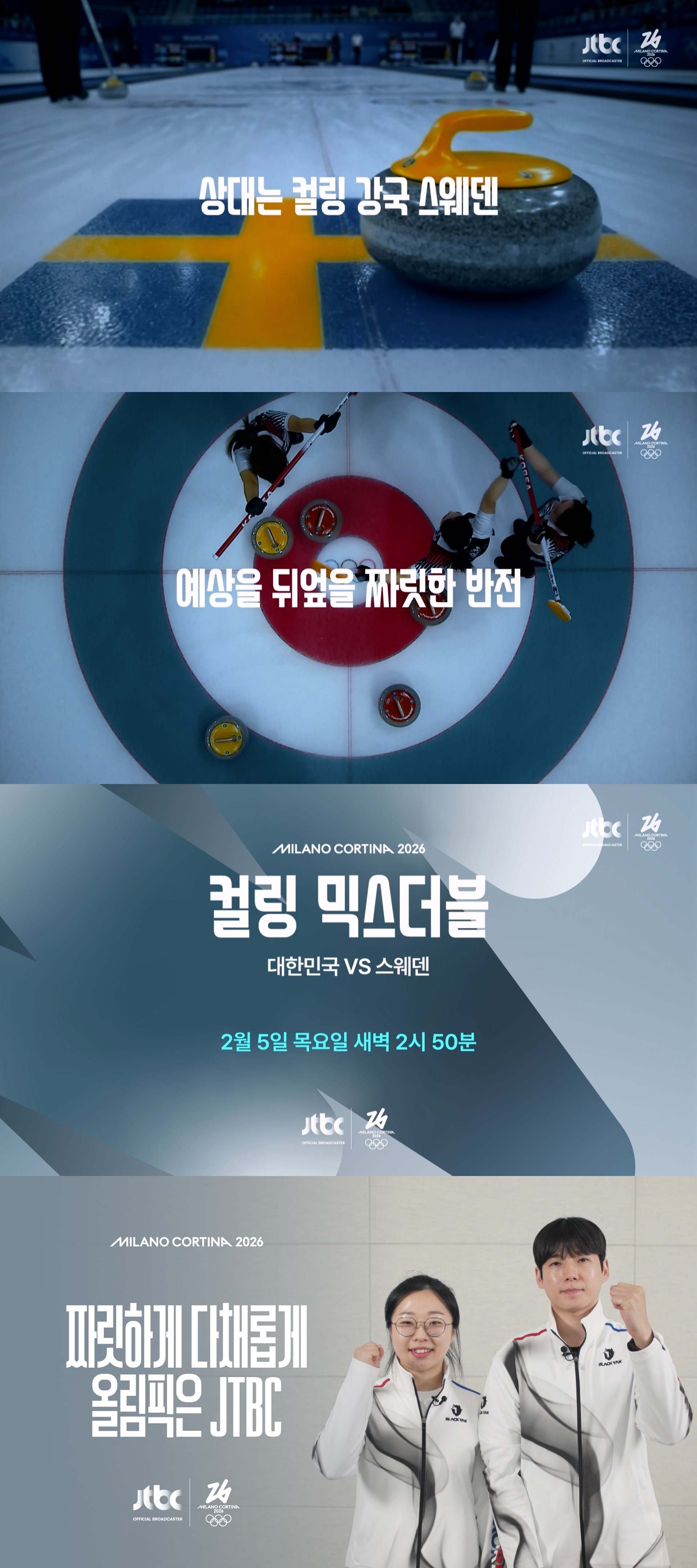
The 2026 Winter Olympics are approaching at a moment when global sports consumption has become increasingly fragmented. Highlights circulate faster than live broadcasts, and major events are often experienced secondhand through clips rather than shared real time. Against that backdrop, the Games in northern Italy present Korean viewers with a quiet challenge: participation now requires intention.
With competition unfolding deep into the night and early morning hours, Milano Cortina 2026 resists passive consumption. Watching live is no longer the default option—it is a deliberate choice. That shift alone changes how the Olympics function culturally in Korea, where winter sports have long carried both competitive dominance and collective memory.
How Broadcast Strategy Shapes Attention
As the domestic rights holder, JTBC is not simply filling airtime with events. Its coverage strategy reflects an understanding that time friction alters viewer behavior. Overnight broadcasts, weekend concentration, and selective emphasis on key matchups all suggest an attempt to preserve a sense of shared experience in an era that no longer guarantees it.
Rather than positioning the Olympics as an always-on background event, this approach implicitly asks viewers to reorganize their schedules. The result is a narrower but more engaged audience—smaller in scale, perhaps, but sharper in attention. In media terms, that trade-off may be unavoidable. In cultural terms, it could be restorative.
Ice Sports and the Weight of Expectation
For Korea, winter Olympic identity has historically been built on ice. Short track speed skating in particular carries an almost institutional expectation of success. Over time, that success has risked becoming routine, even abstract. Medals are anticipated before races begin, and dominance can lose emotional texture.
Late-night competition disrupts that complacency. When finals unfold at dawn, athletic excellence regains immediacy. Victory feels earned not only by athletes but by viewers who chose to witness it live. Fatigue sharpens emotional response; every fall, pass, and finish line moment lands harder when sleep has been sacrificed.
This is why timing matters. It reframes familiar sports as lived experiences again, not just statistical outcomes added to a medal table.
Figure Skating as an Exercise in Focus
Figure skating occupies a different cultural space. It is less about inevitability and more about continuity—careers that stretch across Olympic cycles, judged as much by growth as by results. For Korean skaters, recent years have shifted the discipline from emerging success to sustained expectation.
In an early-morning viewing environment, figure skating becomes almost ritualistic. Silence, concentration, and vulnerability define the experience. Without the distractions of daytime viewing, performances resist casual interpretation. They are not easily reduced to scores or rankings; they linger as moments.
This kind of attention is increasingly rare in contemporary media consumption. That rarity elevates the discipline beyond competition, turning it into a test of psychological and artistic resilience that viewers feel alongside the athletes.
Snow Sports and the Expansion of Possibility
What distinguishes Milano Cortina 2026 from previous Games is not only the continuation of ice dominance but the growing presence of snow sports within Korea’s Olympic narrative. Disciplines like snowboarding, long peripheral to national expectations, now carry symbolic weight.
These events operate under different cultural rules. They emphasize individual style, risk, and global subculture rather than systematized pipelines of success. When Korean athletes appear credibly competitive here, the significance extends beyond podium results. It suggests an expansion of what Korean winter sports can represent.
From a structural perspective, visibility matters. Prominent broadcast placement signals legitimacy, encouraging future investment and participation. Even without medals, repeated exposure reshapes public imagination—and that is how sporting ecosystems change.
Rivalries in an Uncomfortable Time Zone
International rivalries remain a powerful organizing force in Olympic viewership, but their emotional impact is shaped by context. A matchup watched at midnight carries a different intensity than one seen in the afternoon. Exhaustion lowers emotional distance; reactions become less performative and more instinctive.
These moments justify the inconvenience. They transform disrupted sleep into shared tension, reinforcing the idea that the Olympics are not merely content but events that demand presence. In this sense, rivalry functions as an anchor, preventing the Games from dissolving into a series of disconnected clips.
Why This Olympics Tests Attention, Not Just Performance
Milano Cortina 2026 arrives as a referendum on attention itself. In a media environment optimized for ease, an inconvenient Olympics exposes what still compels collective focus. Which sports pull viewers out of bed? Which moments feel worth witnessing live?
For Korean audiences, the answer appears tied to identity and transition. Ice sports reaffirm historical strength. Snow sports hint at future directions. The value of these Games may lie less in medal totals and more in how they are watched—and by whom.

An Open Question After the Final Event
When routines return to normal and the early alarms stop, what will remain? Will these Olympics be remembered as another successful campaign, or as a reminder of what live sports once demanded—and still can?
Milano Cortina 2026 does not offer an easy spectacle. But perhaps that difficulty is precisely what gives it meaning.