The most interesting thing about Fall in! Love is not the office romance itself. Korean romantic comedies have returned to workplace tension many times, but this series adds a sharper imbalance: a former military subordinate now holds institutional power over the person who once controlled him. The setup alone suggests that the drama is less about a cute reunion than about what happens when hierarchy survives long after the uniform disappears.
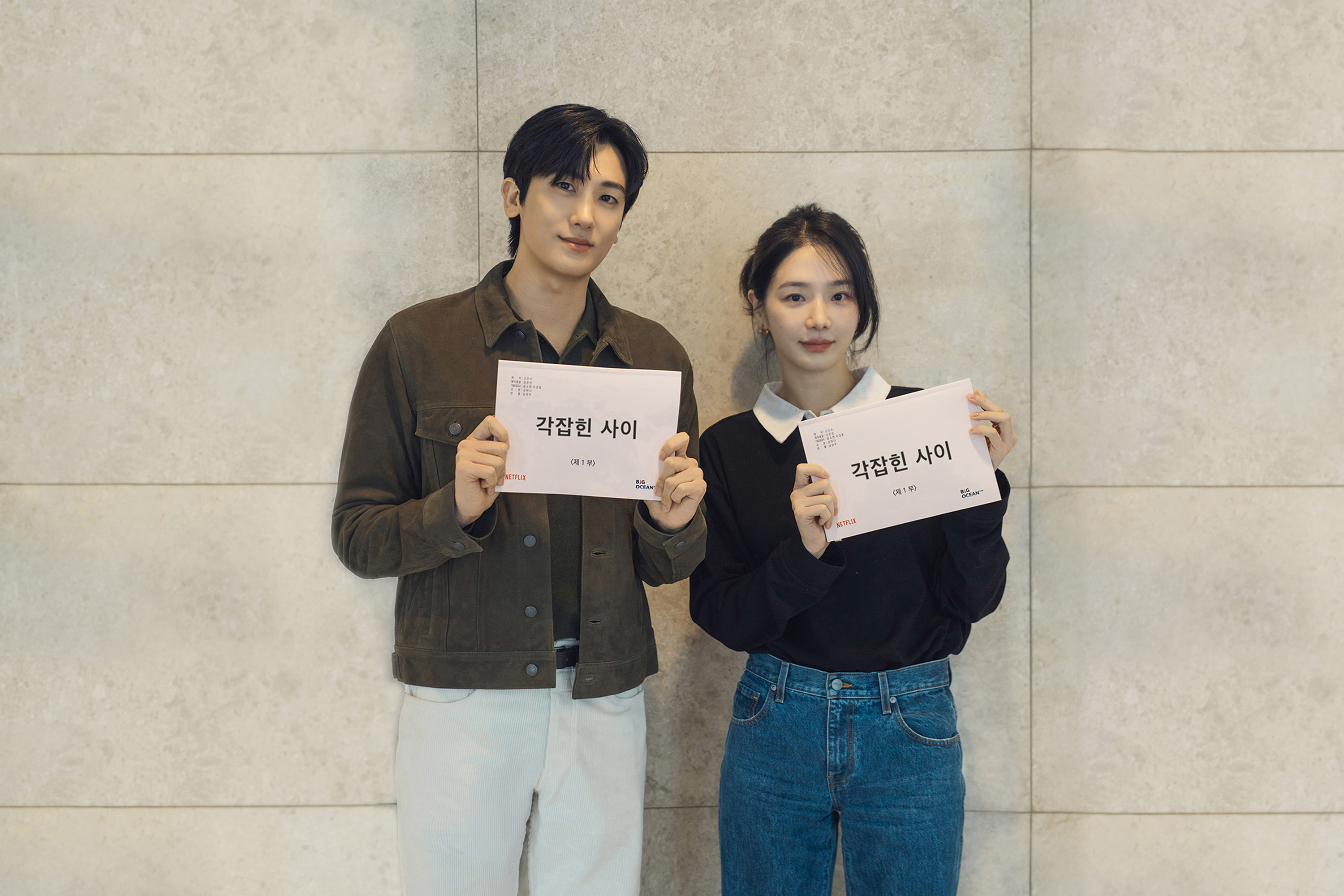
Netflix has positioned the series around Na Jeong-seok, a camping brand CEO, and Woo A-mi, a former military superior who reenters his life as a new employee. Park Hyung-sik and Park Gyu-young lead the project, with Nam Sung-woo directing and Kim Ha-na writing. English-language coverage has circulated both Fall in! Love as a working title and A Proper Romance as an alternate international title, which already hints at a drama trying to balance screwball energy with a stricter emotional design.
A romance built on memory, not first impressions
Most office romances begin with misunderstanding, attraction, or class difference. This one begins with memory. That changes the emotional engine of the story. Jeong-seok and A-mi are not meeting each other as blank slates. They are meeting through old fear, old habits, and an older chain of command that has not fully disappeared, even if their job titles say otherwise.
That matters because romantic comedy often depends on gradual recognition. Two people learn who the other really is beneath surface irritation. Here, the series can reverse that process. These characters may believe they already know each other, only to discover that their old roles were too narrow to reveal the full person. A former subordinate remembers authority. A former superior remembers dependence. Neither memory is likely to be accurate enough for adult intimacy.
This is where the premise becomes more promising than a simple “boss and employee fall in love” formula. Military culture tends to flatten identity into rank, endurance, and obedience. Corporate culture does something similar, just in softer language. If the series is smart, it will not treat the military backstory as a gimmick. It will treat it as a psychological archive. Every joke, every awkward meeting, every moment of hesitation can become evidence that power relations do not end when the setting changes. They just become harder to name.
Na Jeong-seok works best if success has not erased humiliation
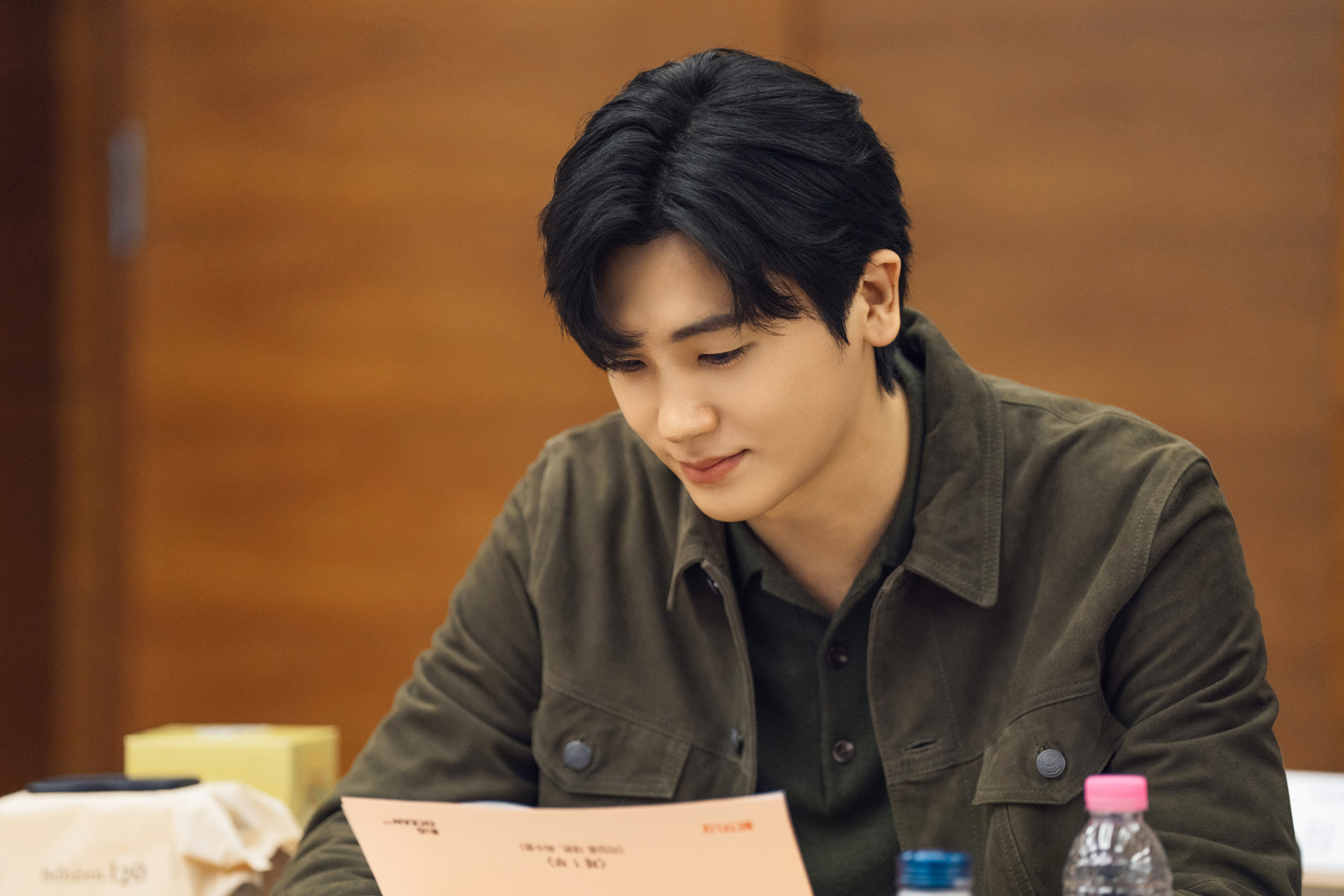
Park Hyung-sik has often been strongest when a character’s polished exterior hides emotional instability or unresolved vulnerability. That makes him a useful choice for Jeong-seok, who now appears to have rebuilt himself into a capable founder after once struggling in the military environment. The role only becomes compelling, though, if his present authority feels slightly overconstructed, as if his confidence has been assembled in reaction to an older wound.
A weaker version of the character would turn him into a standard rom-com CEO: competent, emotionally guarded, and mildly arrogant until love softens him. A stronger version would make his authority defensive. In that reading, A-mi’s arrival is not disruptive because she is attractive or inconvenient. She is disruptive because she carries proof of a self he wants to believe he has outgrown. The office then becomes a stage where adult achievement collides with remembered inadequacy.
That is the version of Jeong-seok that could give the series real bite. Professional success in contemporary romance dramas often functions as visual shorthand for maturity. Good suit, clean office, decisive speech, problem solved. But emotional development rarely moves in the same straight line as career advancement. Jeong-seok could be a man who built a company more easily than he rebuilt his sense of self. If so, romance becomes threatening before it becomes comforting, because love asks for exposure rather than control.
Woo A-mi should not be reduced to the “strong woman with a soft side” template
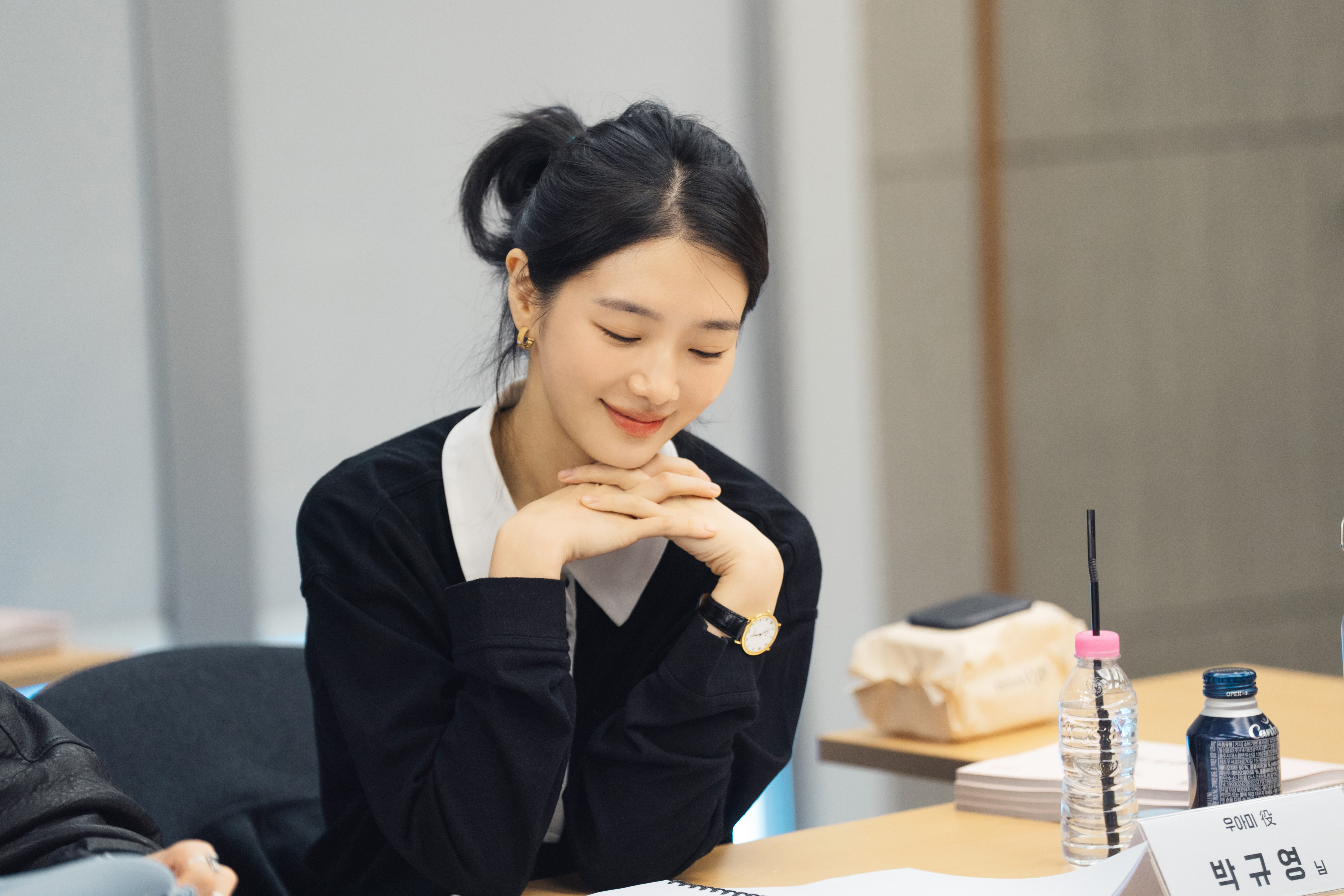
Park Gyu-young’s recent screen persona has been defined by flexibility across genres, but Fall in! Love gives her a chance to play a rarer contradiction. A-mi is introduced as someone once formidable enough to be remembered almost as a nightmare, yet she now enters the civilian workplace from a structurally weaker position as a new hire. That shift creates more dramatic potential than simple toughness ever could.
The obvious route would be to make A-mi charismatic, blunt, and secretly tender. That would certainly work on a surface level. But the richer possibility is that she also experiences a form of displacement. A person trained to lead in one environment may discover that competence does not transfer cleanly into another. Her challenge is not just to adapt to a company. It is to live through the quiet humiliation of having her authority reclassified as irrelevance.
This is why the gender dynamic matters, even if the series never states it directly. Korean romantic comedies have become more comfortable with professionally ambitious women, but they often reward them by eventually folding their power back into emotional legibility. A-mi could resist that pattern if the series allows her to remain difficult to categorize. She does not need to become softer to become lovable. She needs to become more fully visible beyond the myth of the terrifying senior and beyond the simplified workplace label of rookie employee.
If that happens, the chemistry between Park Hyung-sik and Park Gyu-young will matter less as a matter of flirtation and more as a matter of negotiation. The real spark would come from watching two people test whether attraction can survive when both are forced to abandon the identities that once protected them.
The camping company setting may be more than decorative
The outdoor brand backdrop sounds light on first glance, almost like a fashionable visual wrapper for an otherwise standard romance. But thematically it may be one of the cleverest choices in the premise. Camping culture sells self-reliance, discipline, endurance, and authenticity. Those are also values closely tied to military masculinity, just repackaged for lifestyle consumption.
That gives the drama a chance to explore how modern identity is marketed after it is lived. Jeong-seok, now running a camping company, seems to have transformed survival into a brand. What used to be hardship can now be aestheticized into leadership, grit, and premium taste. A-mi’s return threatens that polished narrative because she remembers the unbranded version of him. She knew the man before resilience became a marketable personality.
This is where the series could distinguish itself from flatter workplace romances. It can frame romance as a collision between performed adulthood and witnessed history. In a corporate world, people often control their image by deciding which parts of the past remain visible. A-mi’s very presence interrupts that curation. She does not just know Jeong-seok’s former self. She is part of the social environment that produced it.
If the writing uses that well, the office ceases to be a neutral place of employment. It becomes a battlefield over narrative ownership. Who gets to define who Jeong-seok is now? The CEO himself? The employees who admire him? Or the one person who remembers him as frightened and unformed? Romantic tension becomes inseparable from the struggle over self-authorship.
Nam Sung-woo and Kim Ha-na are well positioned for a character-first rom-com
The creative pairing behind the series suggests that Fall in! Love may lean toward emotional calibration rather than broad farce. Nam Sung-woo has experience with relationship-driven fantasy and character warmth, while Kim Ha-na’s previous work has favored emotional accessibility within high-concept romance structures. That combination matters because this premise could easily swing too hard in one direction: either overly cartoonish or unnecessarily harsh.
A military-to-office reversal needs tonal balance. The comedy has to feel sharp without trivializing the emotional residue of hierarchy. The romance has to feel earned without pretending that attraction automatically resolves old imbalance. A director-writer team comfortable with tenderness may be exactly what keeps the series from turning its central idea into a one-note gimmick.
Still, warmth alone will not be enough. What makes this project interesting is not merely whether the leads fall for each other, but whether the drama takes seriously the question of what equality actually means after asymmetrical history. Many romantic comedies talk about emotional honesty while avoiding structural imbalance. This one begins with imbalance as its core design. That raises the standard. It asks for a love story that understands power, not just chemistry.
Why this premise arrives at the right moment for K-romance
The broader trend in Korean romance has been a move away from pure fantasy and toward tension built from social roles, professional identities, and emotionally uneven histories. Even when the genre stays glossy, it increasingly prefers couples who meet under pressure rather than destiny. Fall in! Love fits that shift neatly. It offers fantasy in casting and style, but its central engine is deeply social: who commands, who remembers, who adapts, and who gets to start over.
That is likely why the military angle feels newly relevant. Military service in Korean storytelling often functions as shorthand for masculine rupture, discipline, or arrested youth. Bringing that experience into a romance does more than add novelty. It opens a route into questions about adulthood itself. Who do people become after systems of control define them? How much of one’s adult persona is chosen, and how much is a reaction to being shaped by institutions?
The office romance genre can sometimes feel exhausted because it reduces conflict to proximity. Two attractive people argue at work and eventually kiss. This series has the chance to restore pressure by making proximity historical instead of merely logistical. The characters are not trapped by desks and deadlines. They are trapped by unfinished interpretation. Each one has been carrying a version of the other for years.
That makes the story potentially resonant beyond fan anticipation. Viewers are increasingly drawn to romance dramas that treat love not as escape from identity, but as confrontation with it. The strongest romances now tend to ask whether intimacy can survive after status, fear, pride, and performance are stripped away. Fall in! Love seems designed to ask exactly that.
What will decide whether the series feels fresh or disposable
Everything depends on whether the drama treats role reversal as a premise or as a method. If it is just a premise, the show will likely be entertaining but forgettable: a polished setup, likable leads, a few satisfying power-flip jokes, and a predictable emotional landing. If it is a method, the series could become more memorable because every interaction would test how human relationships change when formal hierarchy collapses but emotional hierarchy remains.
That distinction is crucial. Reversal alone is not depth. A boss who was once a subordinate is still just a neat hook unless the series shows how the past continues to script present behavior. Jeong-seok may overperform authority because he once lacked it. A-mi may resist vulnerability because she once survived by embodying command. Their romance only gains meaning if both characters realize that changing titles did not automatically change the selves shaped under those titles.
The most successful version of Fall in! Love will not be the one that makes viewers choose who is right. It will be the one that shows how both characters are limited by identities that once protected them. In that sense, romance is not the reward at the end of the story. It is the process through which both must risk becoming unreadable to the roles that defined them.
That is a much more interesting possibility than a simple enemies-to-lovers office comedy. It suggests a series about what remains in the body after authority ends, and whether affection can emerge only after both people stop performing the ranks they no longer officially hold. If the drama understands that, its central question will linger longer than any single plot twist: when two people meet again after hierarchy, are they seeing each other for the first time, or only discovering how much of the past is still in the room?