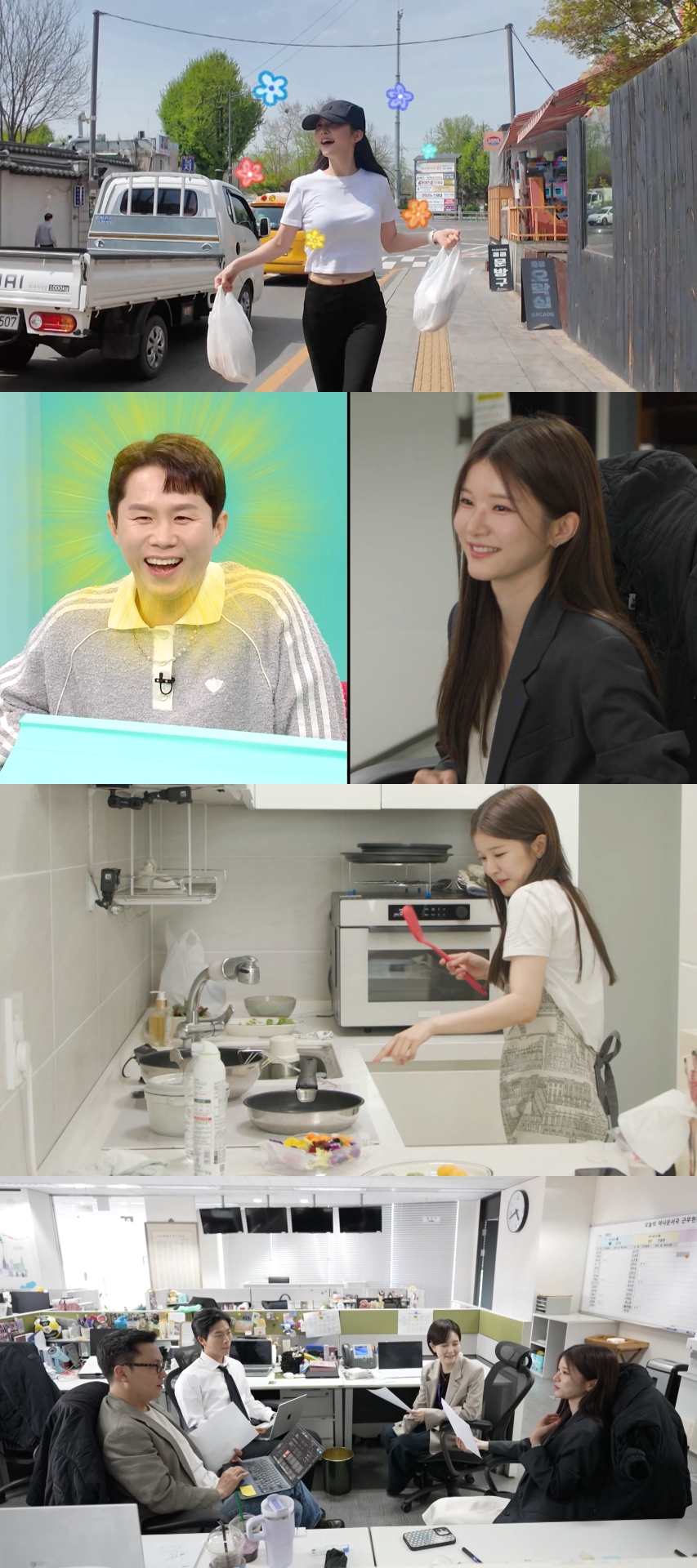
Park So-young’s appeal on Omniscient Interfering View is not built on polish. It comes from the gap between the disciplined image expected of an announcer and the unpredictable rhythm of someone still discovering how entertainment turns imperfection into character.
Her awkwardness becomes a performance language
Park So-young’s running routine matters because it reframes movement as personality. She calls herself a runner, but the humor comes from how loosely her body seems to interpret that identity. The comedy is not about athletic failure; it is about sincerity outrunning technique.
That contrast makes Yang Se-hyung’s presence more interesting. His “real runner” position gives him authority, but the scene works because correction becomes a form of intimacy. The possible romantic tone is less important than the way variety shows convert ordinary advice into emotional tension.
The cooking scene expands her character beyond one joke
Her connection with Sunjae Monk from Culinary Class Wars gives the cooking sequence a cultural hook, but the deeper point is Park So-young’s relationship with competence. A recipe carries discipline, memory, and calm; her kitchen behavior produces disorder, surprise, and accidental comedy.
This matters because variety characters often become flat when they rely on a single trait. Park So-young’s clumsy cooking does not simply repeat her running awkwardness. It shows that her charm comes from trying earnestly in spaces where she has not yet mastered control.
The AI announcer conflict gives the episode its sharper edge
The “AI So-young” versus “human So-young” setup is more than a playful workplace experiment. It touches a real anxiety inside broadcasting: what remains valuable when voice, pronunciation, and delivery can be technically replicated?
Park So-young’s advantage is not perfection. It is hesitation, embarrassment, surprise, and emotional timing. The more the AI can imitate her voice, the more the human version reveals what cannot be reduced to clean output.
Why this character fits the current variety trend
Korean observational variety has moved away from simply showing celebrity lifestyles. Its strongest moments now come from watching public figures lose control of their expected image in small, believable ways.
Park So-young fits that shift because she does not appear to be aggressively manufacturing a persona. Her “new variety star” potential comes from instability: viewers can sense that she is still figuring out how much of herself to reveal.
The larger question is whether sincerity can survive formatting
The risk is that repeated teasing around romance, clumsiness, and AI rivalry could eventually become too packaged. What makes Park So-young interesting now is that her awkwardness still feels open-ended rather than branded.
If Omniscient Interfering View continues to use her not as a punchline but as a case study in modern broadcast identity, her appearances can become more than light entertainment. They can ask a quieter question: in an industry increasingly shaped by performance, technology, and image control, is imperfection becoming the most human form of credibility?