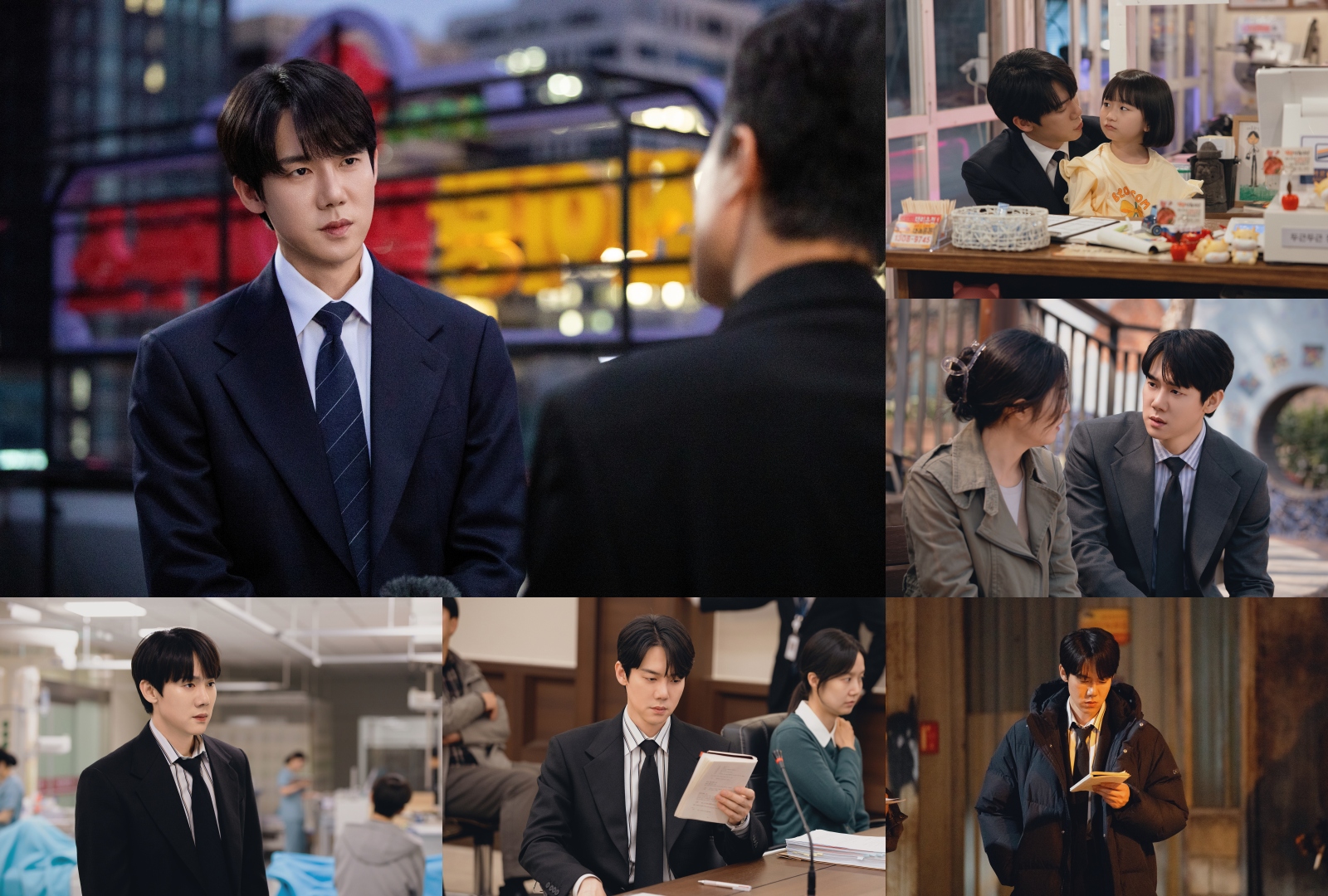
Legal dramas often rely on intellectual dominance. The Spirit Lawyer instead asks a stranger question: what happens when justice depends not on logic alone, but on emotional residue left behind by the dead?
The premise of a lawyer who becomes a conduit for unresolved spirits is not merely a fantasy device. It reframes the courtroom as a space where suppressed grief, resentment, and unfinished narratives demand recognition. In doing so, the series shifts the genre’s center of gravity from evidence to empathy. That shift is precisely why the casting of Yu Yeon-seok feels strategic rather than surprising.
A Comedic Turn That Challenges His Established Persona
Yu Yeon-seok has often embodied restraint — characters who internalize conflict, radiating controlled intensity. Here, that composure is deliberately destabilized. Possession requires surrender. It demands looseness, exaggeration, even absurdity.
This matters because comedic vulnerability exposes more than dramatic brooding ever could. When an actor known for cool precision embraces chaotic tonal shifts, the risk is not simply tonal inconsistency; it is audience disbelief. The success of the role depends on whether viewers accept that the fragmentation of identity is purposeful rather than performative.
Comedy, in this case, is not garnish. It is structural. Each shift in personality tests how elastic both the character and the actor can be.
Possession as a Device for Emotional Multiplicity
The supernatural element functions as more than spectacle. Every spirit introduces a new behavioral language — gestures, rhythms, even physical posture. These transitions turn the protagonist into a mosaic of borrowed lives.
Why does that matter within a legal narrative? Because unresolved grievances are rarely tidy. Traditional legal dramas translate suffering into case files. This series externalizes it. Instead of reducing grief to testimony, it animates it. The courtroom becomes a site where suppressed emotion gains embodiment.
The constant transformation also reflects a broader social tension: modern professionalism demands composure, but human experience is anything but composed. The lawyer’s instability becomes a quiet critique of rigid institutional expectations.
Warmth Versus Calculation as a Structural Conflict
Opposite this spiritually entangled lawyer stands a colder, elite counterpart — a figure rooted in precision and detachment. Their friction is not simply personality contrast; it represents two philosophies of justice.
One prioritizes emotional restoration. The other prioritizes procedural victory.
If their dynamic evolves meaningfully, the show moves beyond quirky supernatural drama into commentary on how systems treat suffering. If not, the tension risks becoming decorative. The narrative weight lies in whether empathy can coexist with ambition without neutralizing either.
Detail as Credibility in an Absurd Framework
The integration of shamanistic motifs, exorcism research, and stylized costume elements suggests a careful attempt to ground fantasy in texture. These choices are not ornamental; they signal that the spiritual layer is treated as cultural practice rather than gimmick.
That grounding is crucial. Without it, possession would read as a comedic trick. With it, the series gestures toward folklore as living narrative infrastructure — something that intersects with contemporary urban life rather than existing outside it.
What This Shift Says About Genre and Stardom
When a well-established actor steps into overtly comedic, physically expressive territory, it reflects an industry recalibrating audience expectations. Viewers increasingly gravitate toward tonal hybridity — stories that oscillate between absurdity and sincerity without apology.
The question, then, is not whether the performance will be entertaining. It is whether this hybridity deepens emotional stakes or simply diversifies spectacle.
If the character’s constant transformations lead to genuine growth — not just episodic novelty — the series could expand how legal dramas approach unresolved trauma. If the shifts remain surface-level, it risks becoming a showcase of technical versatility without thematic resonance.
The deeper tension lingers: can justice rooted in empathy survive within competitive systems built on victory? And when identity itself becomes fluid, who ultimately defines truth — the law, the living, or the voices that refuse to disappear?