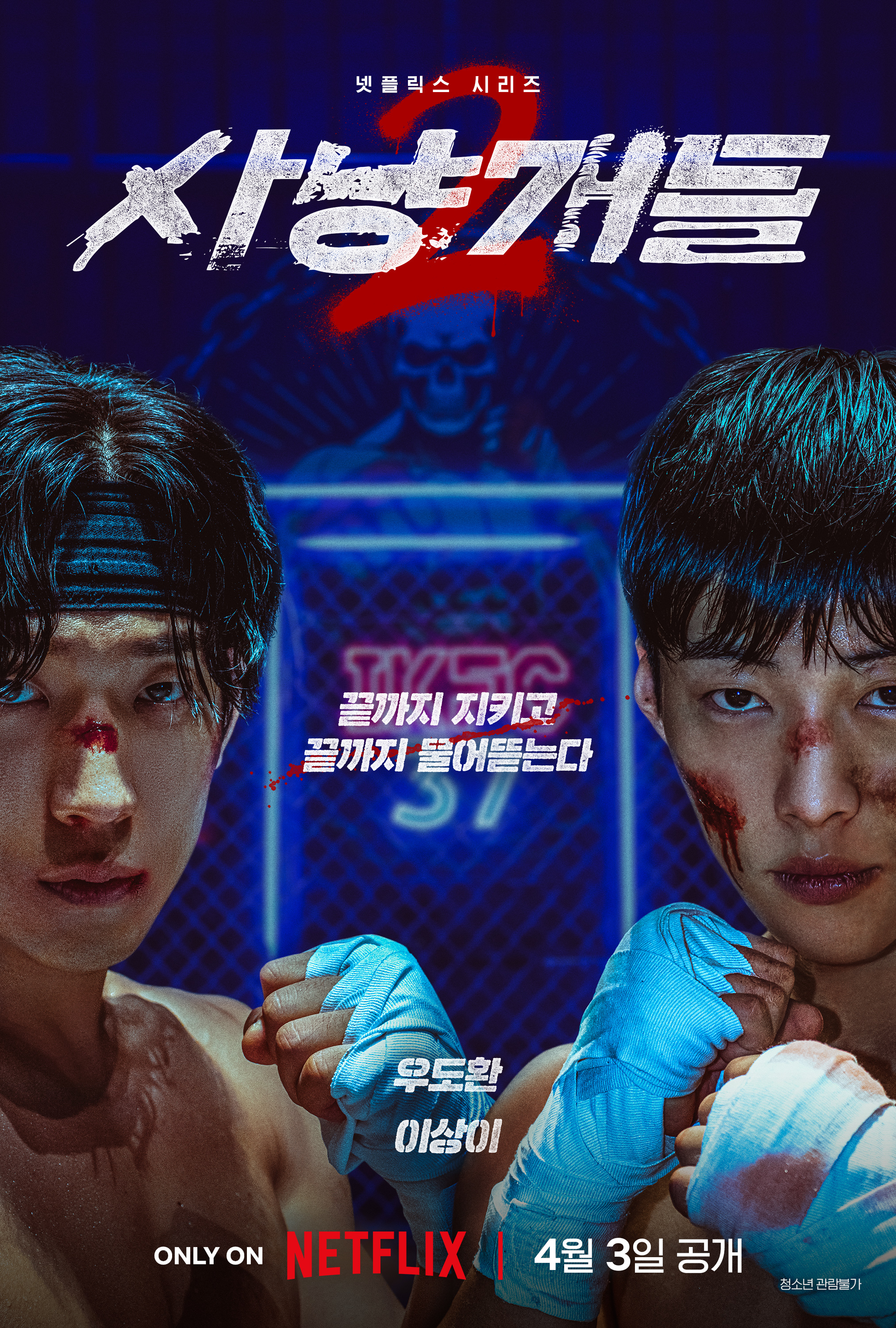
A boxing ring usually represents rules, discipline, and fair competition. Yet Bloodhounds Season 2 pushes the opposite idea: what happens when the structure of sport collapses and violence becomes an economy. The series no longer treats boxing simply as a physical contest. It becomes a system of power where money, loyalty, and brutality collide. That shift reveals why the new season feels less like a sports drama and more like a story about survival inside an underground marketplace of violence.
When Friendship Becomes Strategy Rather Than Emotion
The relationship between Gun-woo and Woo-jin never functioned as a typical buddy dynamic. Their connection has always been built on a shared instinct: protecting each other while confronting systems stronger than themselves. In the new season, that bond evolves from emotional loyalty into tactical survival.
Fighting illegal lenders in the earlier narrative positioned them as underdogs resisting exploitation. Now the scale changes. They step into a space where violence is organized globally and profit replaces any idea of justice. Their partnership therefore becomes a strategic structure rather than simply friendship.
This shift matters because it reframes the characters’ motivations. Their loyalty is no longer just personal—it becomes the only stable force inside an environment where every relationship is transactional.
The Underground Boxing League as an Economic System
Illegal fighting rings are often portrayed as chaotic arenas ruled by brute strength. What Bloodhounds suggests instead is a structured ecosystem. Violence here operates with the same logic as a corporate market: fighters are assets, matches are investments, and brutality is a form of currency.
This framing turns the boxing league into something larger than a criminal setting. It becomes a metaphor for how power circulates through money. Fighters are not only competing for victory but also participating in a system that commodifies human endurance.
The story’s tension emerges from this contradiction. Gun-woo still believes in the integrity of boxing, yet he is forced into a world where the sport exists only as a profitable spectacle. The conflict is therefore not just physical; it is ideological.
A Villain Built on Control Rather Than Chaos
The arrival of Baek-jeong introduces a different type of antagonist. Traditional villains in action series rely on intimidation or unpredictability. Baek-jeong instead represents calculation. His authority does not come from physical dominance alone but from controlling the system that surrounds the fights.
That distinction matters because it changes the stakes of every confrontation. Defeating a single opponent inside the ring does not dismantle the network that empowers him. Violence, in this structure, is only one tool among many.
By positioning the villain as the architect of the league rather than just its strongest fighter, the series turns each match into a symbolic clash between two philosophies: fighting for survival versus fighting for profit.
Physical Strength Versus the Cost of Becoming a Predator
The phrase “becoming scarier than the beast you hunt” captures the central dilemma of the season. To defeat predators, the protagonists must adopt the same ruthlessness that defines the world they oppose.
This creates a moral paradox. The more capable Gun-woo becomes inside the underground arena, the closer he moves to becoming part of the system he wants to destroy. Strength stops being purely heroic; it becomes morally ambiguous.
That ambiguity is essential to the story’s tension. The characters cannot remain untouched by the environment they enter. Every victory risks transforming them into something more dangerous than the enemies they confront.
Why the Story Expands Beyond a Revenge Narrative
Many action series rely on revenge as the central emotional engine. Bloodhounds operates differently. Revenge might initiate conflict, but it does not fully explain the characters’ decisions.
Instead, the narrative focuses on protection. The protagonists repeatedly fight not because they seek vengeance but because they refuse to abandon people they care about. That distinction shifts the emotional weight of each confrontation.
Violence therefore becomes defensive rather than retaliatory. It is the cost of preserving relationships in a world where exploitation thrives. This perspective turns the series into a reflection on loyalty rather than simply a story of retribution.
Action as Character Language
One reason the show stands out among action dramas is the way fights communicate character development. The choreography does more than deliver spectacle; it reflects psychological shifts.
Early fights emphasize raw determination. Later encounters display calculated aggression and strategic patience. The evolution of these combat styles mirrors the characters’ internal changes as they adapt to increasingly dangerous environments.
In that sense, every punch or counterattack becomes a form of dialogue. Physical movement reveals what the characters are becoming long before they articulate it in words.
Why Global Scale Changes the Meaning of the Story
Moving from local crime networks to an international illegal league significantly alters the narrative framework. The earlier conflicts felt personal and immediate. The expanded scale suggests that the forces driving exploitation are systemic rather than isolated.
This expansion transforms the protagonists’ struggle into something symbolic. They are no longer just confronting criminals; they are confronting a structure where violence and profit reinforce each other.
Such a shift raises an uncomfortable question: can individuals truly disrupt a system designed to absorb and monetize every form of resistance?
Violence, Loyalty, and the Limits of Heroism
The most compelling tension in Bloodhounds lies in its treatment of heroism. The protagonists fight fiercely for justice, yet their methods often mirror the brutality of their enemies. The line separating hero from predator becomes increasingly difficult to identify.
This ambiguity reflects a broader theme running through the story. In environments where institutions fail, moral clarity rarely survives. Survival requires compromise, and compromise reshapes identity.
The result is a narrative where courage does not guarantee moral purity. Strength may win battles, but it also changes the people who wield it.
What the Second Round Really Tests
The upcoming confrontation inside the underground league is not simply another round of escalating action. It functions as a test of whether the protagonists can preserve their core values while operating inside a system designed to erode them.
Every victory will demand a deeper descent into the same violent logic that sustains their opponents. The real question is not whether they can defeat stronger enemies, but whether they can emerge without losing the very reason they started fighting.
And if survival in that world requires becoming more ruthless than the predators themselves, what remains of the ideals they once tried to defend?