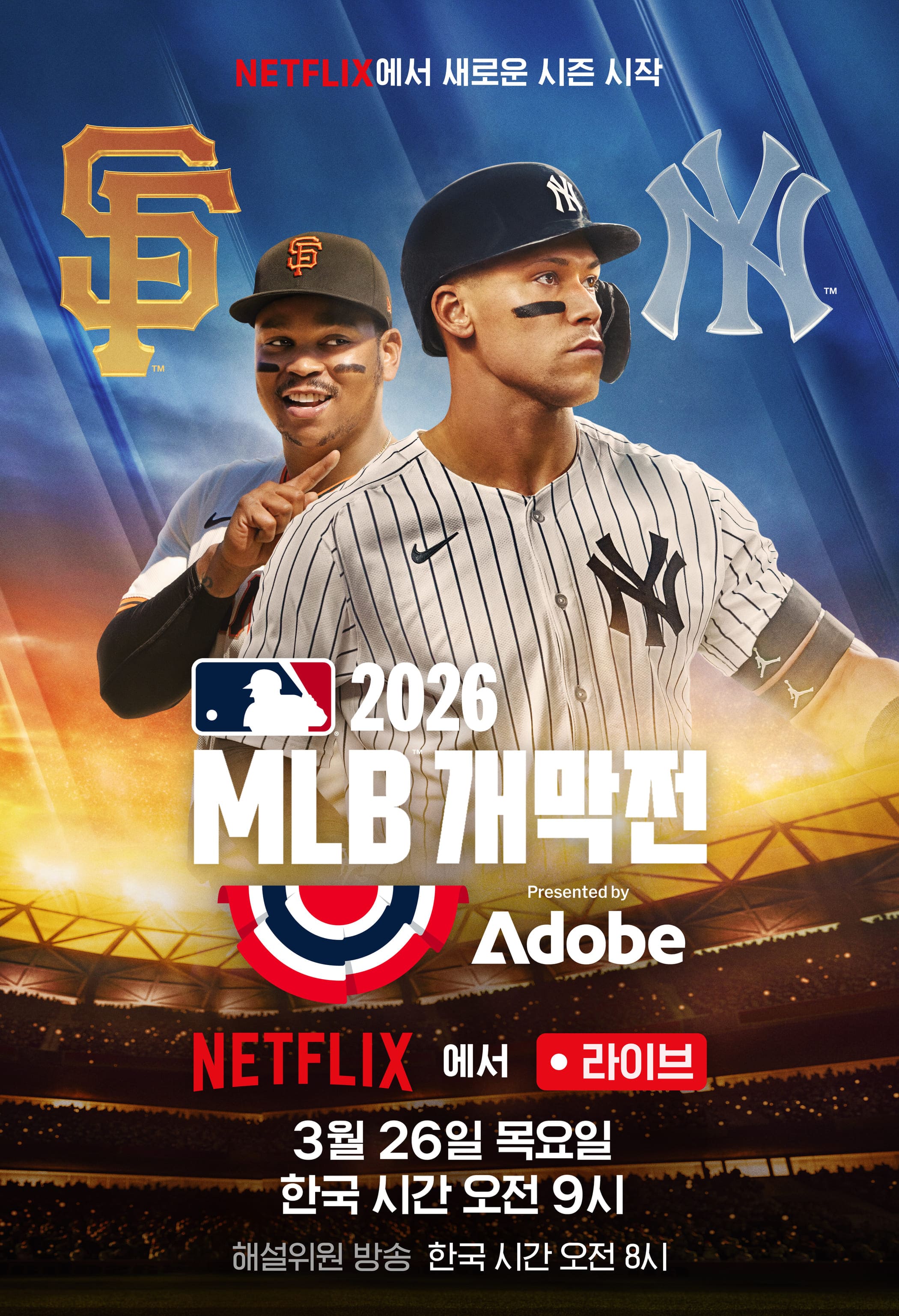
The significance of Netflix stepping into live Major League Baseball is not about a single game—it’s about redefining what kind of platform Netflix intends to become. When a company built on on-demand storytelling begins to prioritize real-time events, it raises a fundamental question: is streaming still about convenience, or is it evolving into a new form of global broadcasting power?
The opening matchup itself carries symbolic weight, but the deeper story lies in how Netflix is positioning live sports as a core pillar rather than an experimental add-on. This is less about competing with traditional sports networks and more about reshaping the conditions under which global audiences experience sports.
A Platform Built on Control Now Embraces Unpredictability
Netflix has historically thrived on total control—release timing, narrative pacing, and viewer engagement patterns. Live sports dismantle that control. The outcome is uncertain, the timeline is fixed, and the audience participates collectively rather than individually.
That shift matters because it forces Netflix into a fundamentally different relationship with its viewers. Instead of binge-driven isolation, live sports create synchronized global attention. This is something traditional broadcasters have relied on for decades, but streaming platforms have largely avoided.
By embracing live baseball, Netflix is not just adding content—it is accepting a format that resists its original business model. That tension is precisely where transformation begins.
Global Accessibility as a Strategic Weapon
Offering commentary in five languages is not a superficial feature—it reflects a deliberate attempt to redefine how sports are distributed globally. Traditional sports broadcasting has been fragmented by region, rights agreements, and localized production.
Netflix’s approach collapses those boundaries. A single platform delivering the same event across multiple languages suggests a model where geography becomes less relevant. Instead of adapting content to regions, the platform standardizes access while customizing experience.
This matters because it aligns with Netflix’s long-term strength: global scale. Sports, historically one of the last region-locked media categories, become a testing ground for truly borderless distribution.
Star Power as Narrative, Not Just Marketing
The presence of high-profile players in the opening game is not merely about competition—it is about narrative framing. Netflix understands storytelling better than any traditional sports broadcaster, and it is likely to treat athletes not just as competitors but as characters within a broader narrative ecosystem.
This changes how games are perceived. Instead of isolated events, matches can become episodes within an ongoing storyline. Pre-game and post-game coverage, produced with cinematic sensibilities, reinforce this shift.
The involvement of legendary figures in commentary further strengthens this narrative layer. Their role is not just to analyze plays but to contextualize moments, turning live action into a story that resonates beyond the scoreboard.
From Content Library to Event Destination
Netflix’s expansion into live events reveals a strategic transition from a passive content library to an active event destination. This distinction is crucial.
A content library invites consumption at any time. An event destination demands attention at a specific moment. That urgency changes user behavior, increasing engagement intensity rather than just duration.
Live sports, wrestling, boxing, and large-scale events all share this characteristic. They create moments that cannot be replicated or delayed without losing value. By integrating these formats, Netflix is building a hybrid model that combines the depth of a library with the immediacy of live broadcasting.
Why Baseball Matters in This Experiment
Baseball, particularly at the opening of a season, offers a unique balance of tradition and accessibility. It is deeply rooted in history, yet structured in a way that allows for global storytelling.
Unlike sports with faster pacing, baseball provides natural pauses—moments that can be enriched with commentary, analysis, and narrative overlays. This aligns well with Netflix’s strengths in production and storytelling.
Choosing baseball as an entry point is not arbitrary. It allows Netflix to experiment with live sports while maintaining a format that can accommodate its narrative-driven approach.
The Convergence of Entertainment and Sports
Netflix’s broader strategy suggests that the distinction between entertainment and sports is becoming increasingly blurred. Live sports are no longer just competitions; they are entertainment experiences that can be packaged, expanded, and reinterpreted.
This convergence is evident in how Netflix approaches production. Collaborating with experienced sports production teams while integrating its own storytelling techniques creates a hybrid format that neither traditional broadcasters nor pure streaming platforms have fully realized.
The result is a new category of content—live events that feel cinematic without losing their immediacy.
A Test of Infrastructure and Trust
Beyond content, this move is also a technical and operational test. Live streaming at a global scale introduces challenges that on-demand platforms rarely face: latency, synchronization, and reliability under peak demand.
Successfully delivering a seamless live experience is not just a technical achievement—it is a trust-building exercise. Viewers must believe that the platform can handle moments that cannot be replayed or recovered.
If Netflix succeeds, it strengthens its credibility as a live event provider. If it fails, the consequences are immediate and highly visible.
What This Reveals About Netflix’s Future Direction
The expansion into live sports suggests that Netflix is no longer content with being a streaming service—it is evolving into a comprehensive media ecosystem.
This includes:
- Serialized storytelling (films and series)
- Reality and unscripted formats
- Live global events
- Sports and competitive entertainment
The integration of these elements points toward a future where the platform is less about content type and more about audience engagement across different formats.
A Shift in How Audiences Experience Time
Perhaps the most subtle but significant change is how this affects the viewer’s relationship with time. On-demand streaming liberated audiences from schedules. Live sports reintroduce them—but with a different context.
The difference is choice. Viewers are no longer bound by schedules imposed by networks; they choose to participate in shared moments. This voluntary synchronization creates a different kind of engagement—one that combines freedom with collective experience.
Netflix’s challenge is to balance these two modes without undermining either.
The Broader Implication: Who Owns the Global Audience?
The real question is not whether Netflix can successfully stream a baseball game. It is whether it can redefine who controls global attention during major events.
Traditional broadcasters have long dominated this space, but their reach is often limited by region and infrastructure. Netflix, with its global subscriber base, has the potential to centralize that attention in a way no broadcaster has achieved before.
If live sports become a consistent part of its offering, the implications extend beyond baseball. It could reshape how sports leagues negotiate rights, how events are produced, and how audiences engage with competition worldwide.
An Open Question About the Future of Live Viewing
The debut of live baseball on Netflix does not provide answers—it raises questions. Can a platform built on flexibility sustain the rigidity of live events? Will audiences embrace this hybrid model, or will it create friction with established viewing habits?
More importantly, if streaming platforms begin to dominate live sports, what happens to the traditional ecosystem that has defined sports broadcasting for decades?
The outcome is not predetermined. But one thing is clear: this is no longer just about watching a game. It is about witnessing the early stages of a transformation in how global audiences gather, in real time, around shared experiences.