What makes a comeback matter is not simple visibility. It matters when actors return carrying the weight of the roles that once defined a cultural moment, while also showing how much Korean screen storytelling has changed since then. That is why the renewed attention on Jung Woo and Yoo Yeon-seok in 2026 feels more meaningful than a standard nostalgia cycle: they are not just reappearing, they are reentering the public imagination from two very different directions. Reply 1994 turned them into emotional symbols of youth television, but their current work suggests something more complicated than a reunion. It suggests a test of how Korean audiences now read maturity, reinvention, and star identity.
Nostalgia works only when the actors are no longer trapped inside it
The enduring power of Reply 1994 came from how precisely it divided youthful longing into contrasting emotional types. Jung Woo’s performance gave warmth, heaviness, and familiarity a romantic shape, while Yoo Yeon-seok embodied the ache of possibility and idealized timing. The series did not simply create two popular characters; it created two different emotional languages for remembering youth. That is why audiences still respond when these two names appear together in conversation. The drama’s afterlife is built less on plot memory than on the feeling that both actors came to represent different ways of growing up.
That history matters now because neither actor is returning by repeating the exact screen energy that made him famous. A comeback fails when it asks viewers to relive the past unchanged. What makes this moment interesting is the opposite: both Jung Woo and Yoo Yeon-seok are moving forward through projects that complicate the images many viewers still hold of them. The cultural charge comes from tension, not repetition. People remember “Trash” and “Chilbong,” but 2026 is asking whether those memories can survive contact with more unstable, older, riskier performances.
Yoo Yeon-seok’s shift works because charm is no longer his only currency
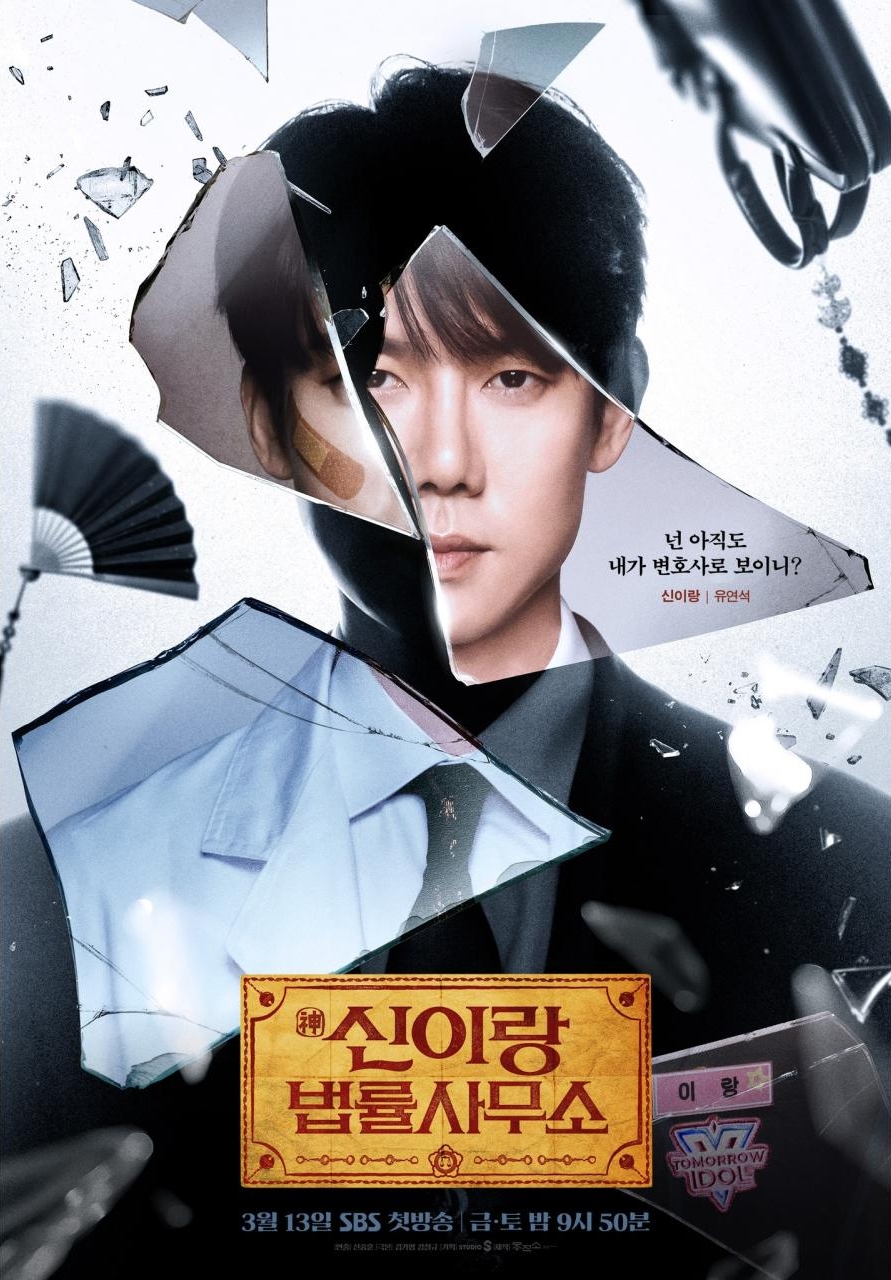
Yoo Yeon-seok’s current SBS series Phantom Lawyer places him in a legal-fantasy framework built around possession, ghosts, and tonal instability. The setup itself matters because it pushes him away from the clean emotional readability that once made him such an effective romantic figure. A character who is repeatedly overtaken by other forces cannot rely only on composure or sincerity. He has to become elastic. That demand changes the meaning of his star image. Instead of offering a polished emotional surface, he has to fracture it on purpose.
This is where his 2026 presence becomes more than a comeback story. Korean television increasingly rewards actors who can move across genres without losing coherence, especially in dramas that blend procedural structure with fantasy and comedy. Phantom Lawyer appears designed around that pressure: the legal setting grounds the material, but the supernatural device forces performance volatility. For Yoo Yeon-seok, that is useful because it repositions him from a memory of romantic youth into a performer who can control abrupt tonal shifts. The question is not whether he can still attract viewers. It is whether he can turn unpredictability into the new center of his appeal. That is a much more durable kind of stardom.
There is also a larger industrial reason this matters. Television in the mid-2020s has become increasingly crowded with concept-driven dramas that require actors to do more than simply anchor emotion. They must also sell the logic of worlds that are stranger, faster, and harder to stabilize. In that environment, Yoo Yeon-seok’s current role functions almost like a public argument for his range. It says his value is not tied to gentleness or longing alone. He can carry formal eccentricity as well. That is a crucial move for any actor whose early peak became strongly associated with one beloved romantic persona.

Jung Woo’s return matters because it turns survival into authorship
Jung Woo’s film Jjanggu is compelling for a different reason. The project is not merely another acting vehicle. Reports around the film describe it as his directorial debut alongside Oh Seong-ho, with Jung Woo also starring, and the Busan International Film Festival listing presented the film under the English title Audition 109. That detail is important because it shifts the frame from comeback to self-definition. He is not only returning to the screen; he is helping shape the terms of that return.
The premise centers on an aspiring actor who keeps enduring setbacks without surrendering the dream. On paper, that can sound familiar, even sentimental. But with Jung Woo, the material carries extra weight because his strength has long been the ability to make bruised persistence feel lived-in rather than theatrical. He has never depended on effortless glamour. His screen presence works through friction: hesitation, wounded pride, stubborn momentum, and a sense that emotional damage never fully disappears. A film about repeated failure therefore becomes interesting not as inspirational content, but as a study of what endurance costs.
That is why Jjanggu may matter more than a simple “return to film” headline suggests. In Korean cinema, stories about youth aspiration often split into two directions: glossy wish-fulfillment or social defeat. A project like this has the chance to occupy the more difficult middle ground, where ambition is neither rewarded quickly nor fully destroyed. If Jung Woo can hold that tension as both actor and filmmaker, his comeback will say something larger about aging within the industry. Not everyone returns by becoming bigger. Some returns become powerful because they become more specific, more authored, and less interested in celebrity polish.
What links these two returns is not reunion, but divergence
It is tempting to frame this moment as the “return of the Reply 1994 team,” but that phrase can flatten what is actually interesting. Jung Woo and Yoo Yeon-seok are not moving back toward each other in artistic terms. They are moving further into different territories. One is testing the flexibility of a television star persona inside a genre-hybrid drama. The other is grounding a film comeback in authorship, vulnerability, and the long shadow of failure. The value of seeing them discussed together lies in contrast, not symmetry.
That contrast also reveals how the memory of Reply 1994 continues to function. The drama still gives audiences a common emotional reference point, but the actors no longer belong to that frame in the same way. Back then, they helped define youth from inside it. In 2026, they are more interesting because they reflect what happens after youth stops being a stable identity. One actor bends his image into volatility. The other turns wear and resilience into creative material. Together, they show that the real sequel to a youth drama is not another love triangle. It is the long career negotiation that follows early cultural canonization.
The larger meaning lies in how Korean audiences now consume familiarity
Korean entertainment has become increasingly dependent on recognizable names, but recognition alone no longer guarantees impact. Audiences are exposed to too many releases, too many genres, and too many algorithm-driven cycles of attention. In that environment, familiar faces matter only when they return with a sharper reason to be watched. That is precisely why Jung Woo and Yoo Yeon-seok feel newly visible at the same time. Their names trigger memory, but their current projects ask for a different kind of engagement. Viewers are not simply being asked to remember who they were. They are being asked to decide whether these actors have found the right new form for who they are now.
There is something revealing in that shift. The strongest nostalgia today is rarely about restoration. It is about recalibration. Audiences want continuity, but they also want proof that time has mattered. A comeback becomes persuasive when it shows scars, adaptation, or formal risk. Yoo Yeon-seok’s move into a role built on possession and tonal play gives him that risk. Jung Woo’s choice to return through a film tied to authorship and struggle gives him another version of it. The shared headline may be nostalgia, but the real story is how differently they are negotiating the burden of being remembered.
What audiences may really be waiting for is not success, but reinterpretation
The most interesting question around both actors is not whether these projects will perform well enough to count as successful. Success is the least revealing measure for performers who already carry cultural memory. The better question is whether these roles can change the way earlier roles are remembered. If Yoo Yeon-seok deepens his image through instability, then even “Chilbong” starts to look less like a fixed romantic archetype and more like one chapter in a broader acting vocabulary. If Jung Woo turns Jjanggu into a convincing portrait of battered persistence, then “Trash” may no longer stand as the central emotional key to his career. It may become only the most famous early expression of a deeper interest in wounded endurance.
That is why this 2026 moment deserves more than reunion language. It is not primarily about seeing two beloved actors again. It is about watching what happens when performers once frozen inside youth nostalgia try to control the next reading of themselves. One is doing it through genre mutation. The other is doing it through personal creative stake. Both moves suggest that the real afterlife of Reply 1994 may not be sentimental memory at all, but the challenge of outgrowing it without losing the audience that still carries it.