Romantic comedies often rely on contrast—city versus countryside, warmth versus distance. But Sold Out on You introduces a more relevant tension: two individuals who are already exhausted before love even begins. That shift changes the stakes. This is not just about attraction, but about whether people who have been consumed by their own lives can still allow space for something unscripted.

The contrast is not about location, but about two forms of performance
The rural-urban divide initially feels familiar. A quiet farmer meets a high-energy show host. One appears grounded, the other expressive. But the more meaningful contrast lies in how both characters are shaped by performance.
Matthew’s world is not simply peaceful. It is built on repetition, endurance, and physical labor. His emotional restraint likely comes from a life where consistency matters more than expression. Meanwhile, Dam Ye-jin operates in a space where personality itself becomes a tool. Selling is inseparable from presenting, and authenticity is often filtered through technique.
What looks like opposites may actually be two variations of the same condition: people trained to function before they feel.

Ahn Hyo-seop’s role depends on restraint rather than charm
Ahn Hyo-seop’s presence brings familiarity, especially within the romantic genre. But this role works only if it resists easy likability. Matthew cannot simply be another polished male lead with a cold exterior. He needs to feel like someone who has normalized emotional suppression.
That requires a quieter performance. The appeal should come from what is held back rather than what is openly expressed. If warmth appears too quickly, the character loses tension. But if it emerges slowly, almost reluctantly, the romance gains weight.
This is where the performance matters. Not in how charming he can be, but in how convincingly he can seem unavailable to himself.
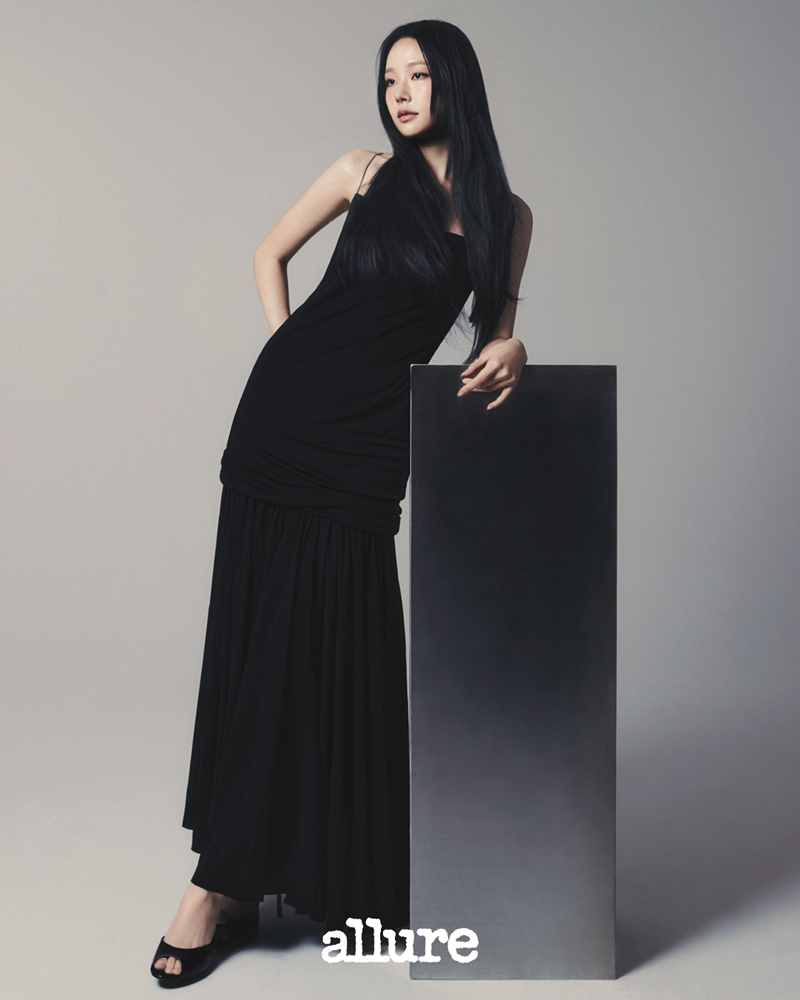
Chae Won-bin’s character challenges the idea of the “strong urban heroine”
Dam Ye-jin could easily fall into a familiar archetype: stylish, confident, and emotionally guarded. But her profession suggests something more complex. A top show host is constantly visible, constantly persuasive, and constantly adapting.
That kind of visibility comes with hidden cost. She is expected to feel on command, to connect instantly, and to remain appealing regardless of her internal state. This makes her less of a “strong female lead” and more of a character shaped by continuous output.
Her energy may not come from confidence alone, but from necessity. And that distinction changes how her relationship unfolds. She is not simply opening up—she is learning how to stop performing.

“Sold out” works as a metaphor for emotional depletion
The title carries a dual meaning. It suggests success, demand, and popularity. But it also implies emptiness—the idea of having nothing left.
Both characters reflect this condition. One produces through labor, the other through presentation. Both are valued for what they deliver. Over time, that kind of structure turns people into systems. They continue to function, even when they are emotionally exhausted.
This is where the drama can separate itself. If “sold out” is treated as more than a clever phrase, the story becomes about depletion rather than just romance. Love, in that case, is not an addition to their lives. It is a disruption of how they have been living.
Romance here is not escape, but recognition
It is tempting to see love as a way out. The countryside softens the city. The lively heroine warms the quiet man. Balance is restored. But that version simplifies what the characters represent.
A more compelling direction is that neither character needs saving. What they need is awareness. Matthew may mistake endurance for strength. Ye-jin may mistake performance for connection. Their relationship becomes meaningful only when those assumptions begin to break.
Love, then, is not about becoming different people. It is about recognizing how much of themselves has already been shaped by survival.
The real question is whether intimacy can exist after exhaustion
This is what gives the story its relevance. Many people today do not enter relationships as empty spaces waiting to be filled. They arrive already occupied—by work, by expectations, by routines that leave little room for anything else.
If Sold Out on You leans into that reality, it becomes more than a seasonal romance. It becomes a reflection of how difficult it is to feel something genuine when most of your energy has already been spent elsewhere.
And that raises a quieter question beneath the romance.
When everything in your life is already “sold out,” what does it actually mean to let someone in?