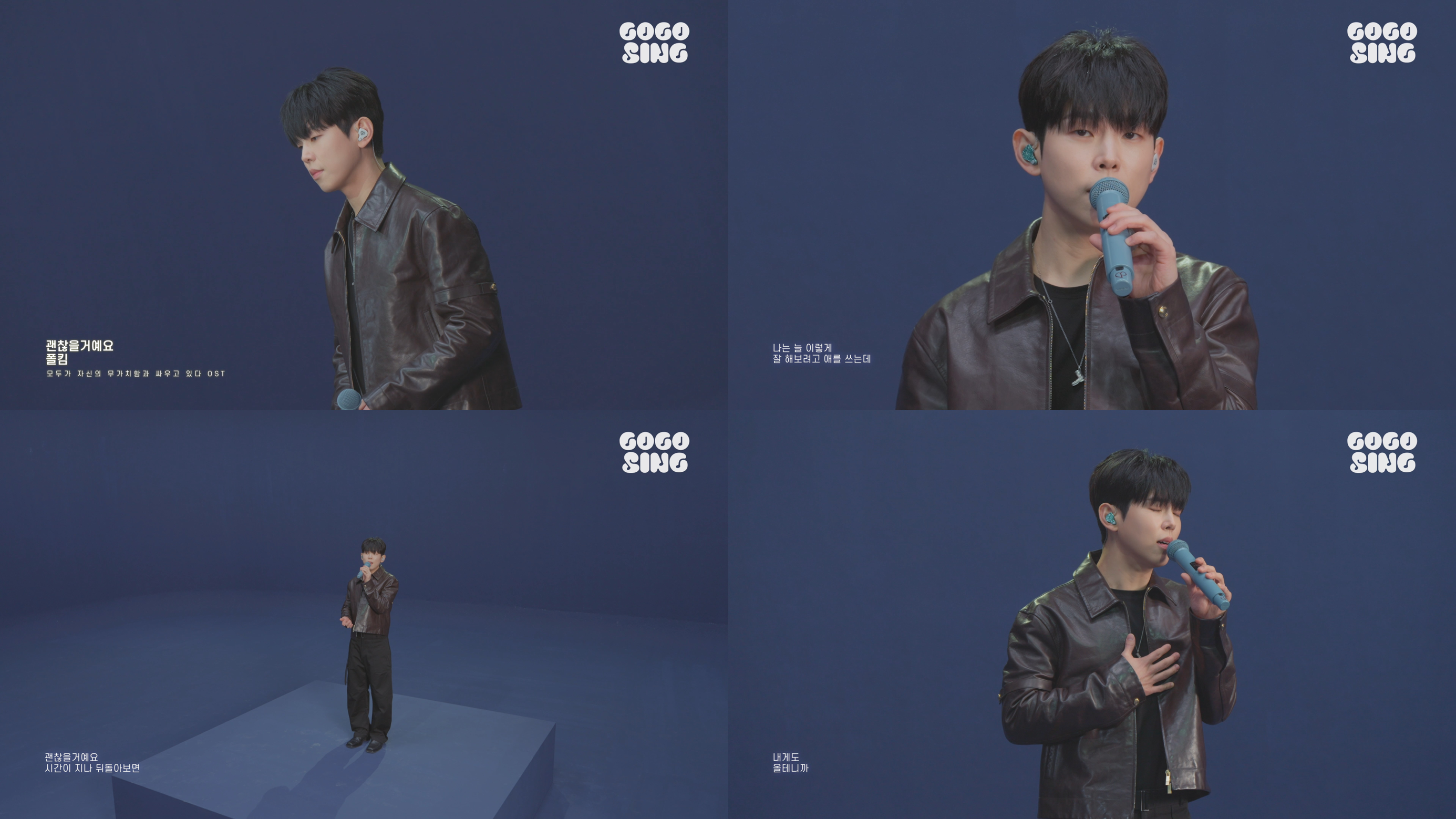
The emotional impact of Paul Kim’s “It Will Be Okay” becomes clearer once it is separated from the structure of We Are All Trying Here. In the drama itself, the song operates like an emotional bridge between moments of exhaustion, disappointment, and self-doubt. But outside the narrative, especially in the LIVE DAN performance, the song reveals something more interesting: the drama was never really about overcoming weakness. It was about learning how to exist while carrying it.
That distinction matters because many recent dramas approach emotional hardship as a temporary obstacle on the way toward growth. We Are All Trying Here feels different. Its characters do not move through pain in a clean arc. They hesitate, regress, and emotionally stall. The drama understands that insecurity is not always something people defeat. Sometimes it simply becomes part of how they continue living.
The OST succeeds because it avoids dramatic catharsis
“It Will Be Okay” works precisely because it refuses to sound triumphant. The arrangement remains restrained, and Paul Kim’s vocal delivery avoids emotional excess even at the song’s most vulnerable moments.
That restraint changes how the reassurance is interpreted. Instead of sounding like certainty, the phrase “it will be okay” feels provisional — something spoken carefully between people who are not fully convinced themselves. The emotional honesty of the song comes from that hesitation.
In many OSTs, comfort arrives as resolution. Here, comfort arrives as companionship.
The LIVE DAN version turns private emotion into shared space
The live performance shifts the emotional function of the song. In the drama, the track belongs to fictional characters and specific scenes. On the LIVE DAN stage, the song is detached from narrative context and becomes more personal for the audience.
This transition matters because it exposes how much of the song’s appeal comes from emotional recognition rather than story attachment. Viewers are no longer reacting to plot developments. They are reacting to the feeling of emotional fatigue that the song quietly preserves.
The intimacy of the performance also changes the listener’s role. Instead of observing characters struggle, the audience becomes emotionally implicated in the atmosphere itself.
Paul Kim’s voice works because it sounds emotionally unguarded
One reason Paul Kim consistently fits emotionally reflective dramas is that his voice rarely sounds performative. Even technically polished moments retain a conversational softness.
That quality is especially important in We Are All Trying Here, where emotional conflict is internal rather than explosive. The drama depends less on shocking revelations and more on accumulated emotional weariness. A louder or more theatrical vocal interpretation would likely weaken the realism the story is trying to maintain.
His performance preserves vulnerability without turning it into spectacle.
The drama’s title suggests effort, not achievement
The phrase We Are All Trying Here is significant because it lowers the emotional threshold for empathy. The title does not imply success, healing, or transformation. It only implies effort.
That perspective reflects a broader shift in contemporary Korean dramas dealing with mental exhaustion and emotional burnout. Increasingly, these stories are less interested in idealized recovery narratives and more interested in emotional coexistence — how people continue functioning despite unresolved uncertainty.
The OST reinforces this philosophy. “It Will Be Okay” never fully resolves the tension at its center. Instead, it acknowledges that reassurance itself can be incomplete.
The most lasting dramas often leave emotional questions unresolved
What makes We Are All Trying Here resonate is not its ability to provide answers. It is the way it normalizes emotional instability without romanticizing it.
The LIVE DAN performance extends that feeling rather than concluding it. Even after the story moves toward its ending, the song remains emotionally unfinished. That lingering uncertainty may ultimately be the point.
Not every struggle becomes meaningful in hindsight. Not every wound turns into growth. Sometimes people are simply trying to get through another day without collapsing under expectations they no longer know how to meet.
And perhaps that is why a quiet song like “It Will Be Okay” can feel more truthful than something louder or more definitive.