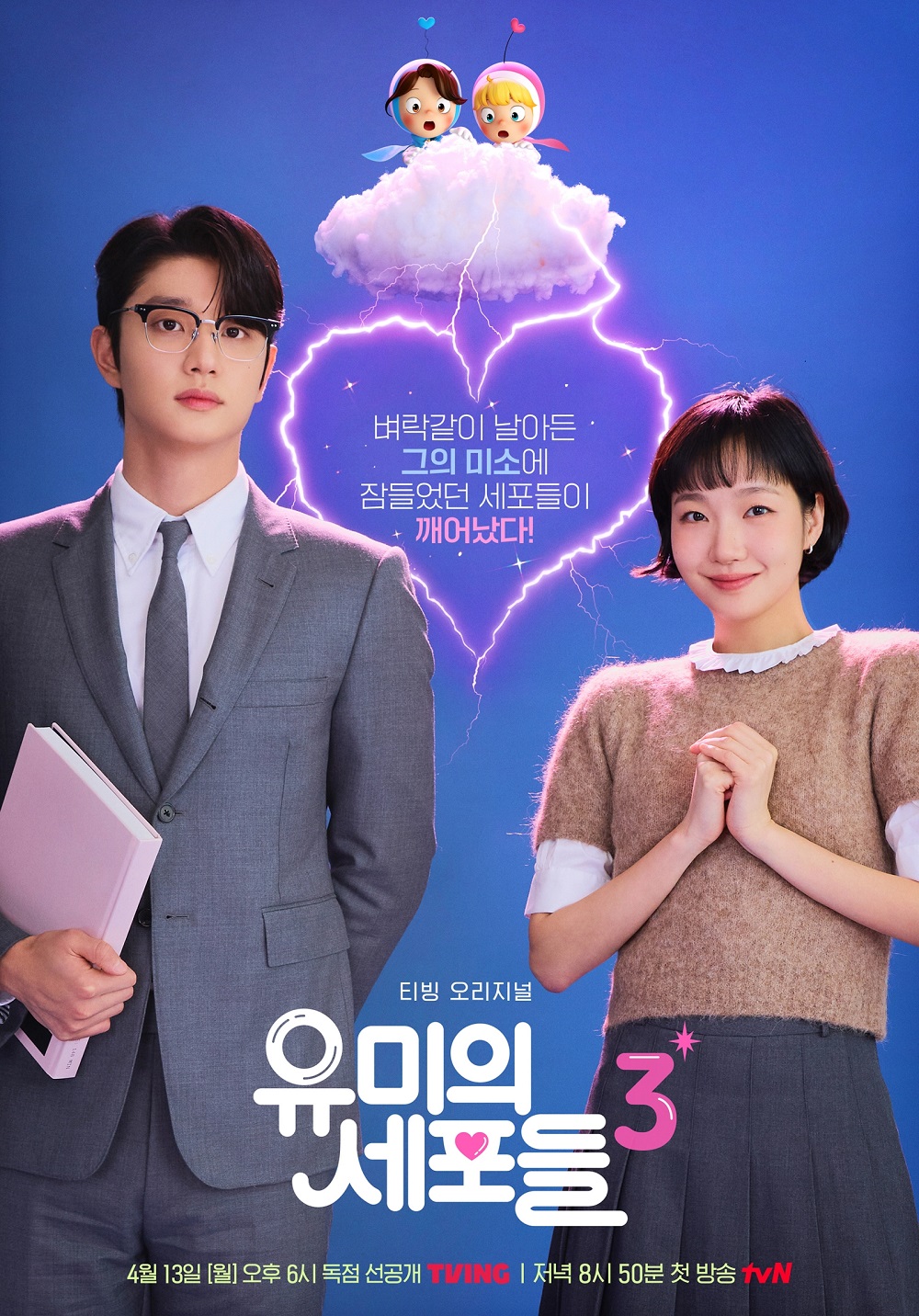
Most Korean drama franchises lose momentum the moment they extend beyond a single season. Viewers may return out of curiosity, but emotional attachment often weakens once the original novelty disappears. That pattern is especially common in romance dramas, where chemistry is usually treated as the core selling point rather than long-term character evolution. Yumi’s Cells avoided that trap by building its identity around emotional continuity instead of narrative escalation.
What makes the series unusual is not simply that it survived three seasons. The more important point is that its audience appears to have expanded alongside the protagonist’s emotional timeline. In an industry where sequel fatigue arrives quickly, sustained growth across multiple seasons suggests something deeper than temporary popularity. It points to a structural understanding of how viewers form attachment over time.
The series succeeded because it treated ordinary emotional change as long-form storytelling
Many romance dramas rely on heightened conflict to maintain attention in later installments. Characters become more dramatic, relationships become more chaotic, and narratives increasingly depend on twists. Yumi’s Cells moved in the opposite direction. The longer the story continued, the more it focused on subtle emotional accumulation.
That decision changed the viewing experience entirely. Yumi’s growth was never framed as a heroic transformation. Instead, the series concentrated on the small recalibrations people experience while aging: changing expectations in relationships, learning emotional boundaries, balancing career identity with intimacy, and accepting uncertainty without turning cynical.
This approach created a rare kind of serialized intimacy. Audiences were not simply waiting to see “what happens next.” They were measuring how a familiar person changes over years. That distinction matters because long-running franchises survive only when viewers feel time itself has narrative value.
The cell-based storytelling mechanism also played a major role in sustaining freshness. What initially looked like a stylistic gimmick evolved into a psychological language for the series. The animated cells transformed internal hesitation, anxiety, pride, and desire into visible narrative action. Over three seasons, that device allowed emotional repetition to feel layered instead of redundant.
A female-centered franchise became commercially viable without abandoning emotional specificity
One of the most significant aspects of Yumi’s Cells is how confidently it remained centered on a single woman’s perspective. Korean entertainment has historically produced many successful romance dramas, but relatively few become durable franchises when built around female subjectivity rather than broad ensemble spectacle.
The industry often assumes that women-led emotional narratives are limited in scalability. Franchises are usually associated with action universes, crime sagas, fantasy worlds, or male-driven hero structures. Yumi’s Cells quietly challenged that assumption by proving that emotional realism itself can function as expandable IP.
The key was consistency of perspective. The series never attempted to reinvent itself through radical tonal shifts. Instead, each season deepened the same emotional framework. That continuity allowed viewers to develop a long-term relationship not just with the character, but with the emotional logic of the show itself.
Kim Go-eun’s performance became central to this durability. Her portrayal avoided the exaggerated romantic performance style that often dates K-dramas quickly. Yumi remained emotionally readable without becoming idealized. The character could be insecure, selfish, hopeful, immature, ambitious, or exhausted—sometimes within the same episode. That elasticity gave the franchise longevity because viewers could continue recognizing themselves inside the character’s contradictions.
The result is important beyond a single show. It suggests that Korean OTT platforms may be underestimating the franchise potential of emotionally grounded female narratives.
The hybrid format solved a major problem in romance storytelling
Romance stories frequently struggle with repetition because emotions are difficult to visualize after the initial relationship arc concludes. Once confession scenes, misunderstandings, and reconciliations become familiar, many dramas lose dramatic energy. Yumi’s Cells found a way around that limitation through its live-action and 3D animation hybrid structure.
The animated cells externalized emotional micro-conflicts that traditional romance dramas usually skip. Small internal reactions became events. Embarrassment could trigger chaos. Anxiety could hijack decision-making. Rational thought and emotional impulse could literally argue on screen.
This structure made emotional processing feel dynamic rather than static. Even routine conversations carried narrative tension because viewers could see the psychological machinery underneath them. Over multiple seasons, that device prevented emotional familiarity from turning into stagnation.
More importantly, the format aligned with how modern audiences increasingly interpret relationships. Contemporary viewers are highly fluent in emotional self-analysis. Online culture constantly encourages people to categorize feelings, recognize behavioral patterns, and discuss emotional labor. Yumi’s Cells translated that psychological vocabulary into entertainment form.
That may explain why the series resonated internationally despite its deeply localized emotional details. The emotional grammar of self-awareness now travels globally.
The franchise benefited from streaming-era viewing behavior rather than traditional broadcast logic
Traditional television often rewards immediate impact. Streaming franchises, however, depend more heavily on emotional retention. Audiences may binge older seasons, revisit favorite episodes, or emotionally re-enter a series months later. Yumi’s Cells was structurally ideal for that ecosystem.
The show’s emotional continuity encouraged cumulative investment. New viewers could discover the series through later seasons and still feel compelled to return to earlier installments. Existing fans could revisit previous emotional stages of Yumi’s life and reinterpret them with added context.
This kind of recursive viewing is extremely valuable for OTT platforms. Instead of functioning as disposable weekly content, the series becomes a living catalog asset. Each new season increases the relevance of previous seasons rather than replacing them.
Its international expansion also reflects how streaming platforms increasingly prioritize emotionally accessible storytelling over culturally neutral storytelling. Yumi’s Cells never diluted its Korean identity to appeal globally. Instead, it leaned into emotional universality through specificity. That strategy often works better because audiences respond more strongly to authentic emotional texture than to generic globalization.
The strong performance across platforms in different regions suggests that viewers are not merely consuming Korean dramas for novelty anymore. They are building long-term attachment to recurring emotional worlds.
What the success of Yumi’s Cells reveals about the future of K-drama franchises
Korean entertainment has spent years trying to identify repeatable franchise models, but most attempts still imitate Western expansion logic: larger universes, darker stakes, broader mythology, or escalating spectacle. Yumi’s Cells succeeded by doing something much quieter.
It treated emotional continuity as scalable.
That may become increasingly important as streaming competition intensifies. Viewers overwhelmed by endless content often return to stories that provide emotional familiarity rather than constant surprise. In that environment, franchises built around psychological intimacy may prove more sustainable than franchises built purely around plot escalation.
There is also an interesting generational aspect to the show’s popularity. Audiences who began watching Yumi in earlier seasons have effectively aged alongside her. The relationship between viewer and character becomes temporal rather than episodic. Few K-dramas have managed to create that feeling at scale.
The larger question now is whether the industry understands why the franchise worked. Replicating the surface elements—webtoon adaptation, animation hybrids, multi-season romance—will not necessarily produce the same result. The real achievement was patience. The series trusted that viewers would remain invested in incremental emotional change.
That trust is rare in contemporary streaming culture, which often assumes audiences need constant escalation to stay engaged.
Yumi’s Cells suggests the opposite may also be true: sometimes audiences stay because a story allows them to recognize the slower changes happening within themselves.