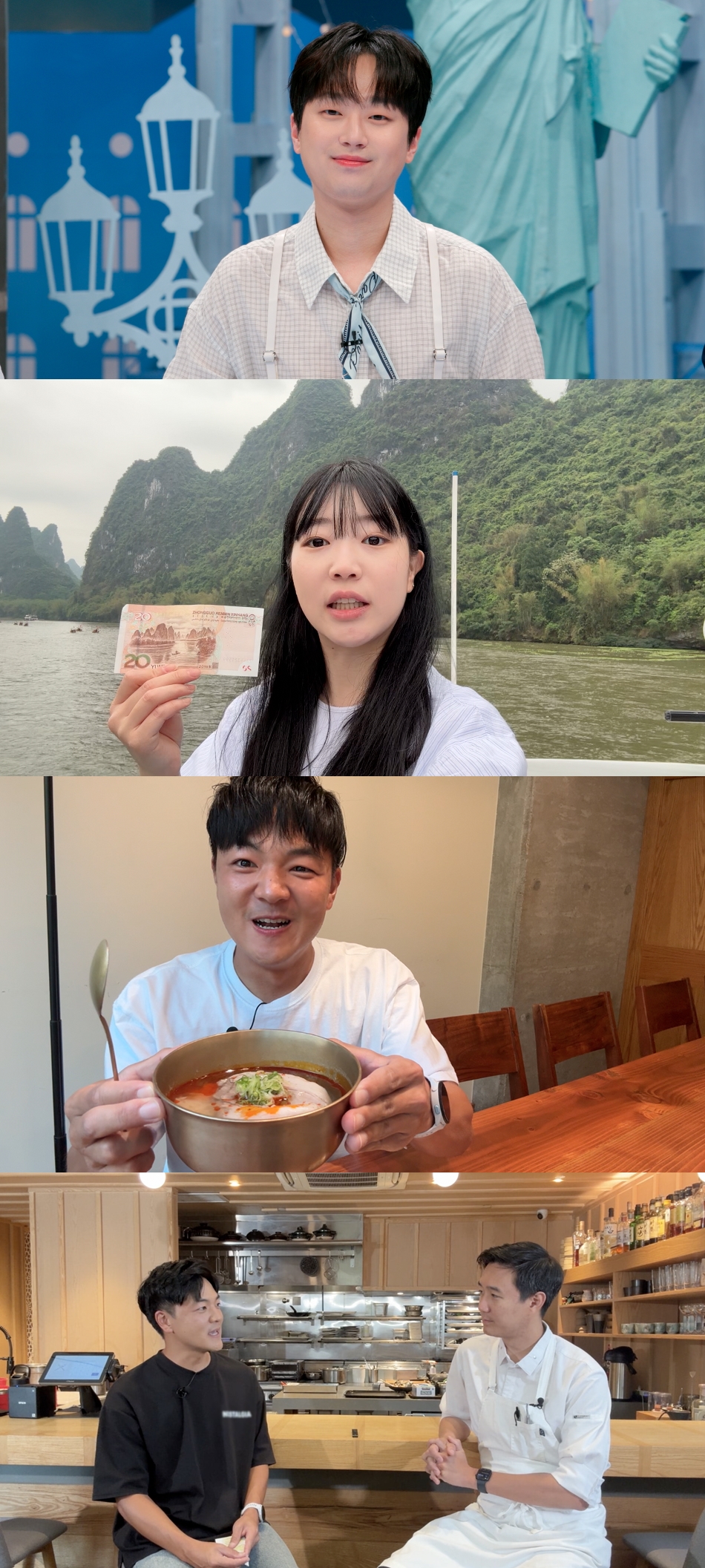
Travel variety shows often claim to introduce new destinations, but the more interesting question is why certain places keep returning to Korean television. In the latest episode of Talk Pawon 25 O’Clock, Guilin is presented not simply as a scenic destination in China but as a symbolic answer to a familiar Korean concern: how to spend meaningful time with aging parents. The choice of location reveals how travel entertainment increasingly operates as a reflection of family values rather than tourism itself.
Guilin’s appeal is less about adventure than reassurance
Many contemporary travel programs emphasize unpredictability, local immersion, or personal transformation. Guilin represents the opposite approach. Its popularity comes from offering a landscape that feels immediately understandable.
The limestone mountains, calm river routes, and panoramic viewpoints create the impression of a traditional East Asian painting brought into reality. That familiarity matters. For older generations, travel often becomes less about discovering the unknown and more about experiencing beauty without physical or emotional stress.
The episode’s focus on a luxury river cruise highlights this shift. Rather than presenting travel as an achievement, it frames travel as comfort. The destination becomes attractive because it minimizes uncertainty while maximizing visual reward.
The river functions as a moving stage rather than a destination
One of the most striking aspects of Guilin is that many visitors remember the journey itself more than any specific landmark.
The Li River has long been associated with iconic Chinese imagery, appearing in photographs, paintings, and even currency. Yet the television format transforms the river into something different. The cruise becomes a narrative device that allows viewers to observe continuous scenery without interruption.
That approach reflects a broader trend in Korean travel television. The destination is no longer treated as a checklist of attractions. Instead, movement becomes the experience. The camera drifts through landscapes much like the travelers themselves, creating a sense of slow observation that contrasts sharply with fast-paced online travel content.
In a media environment dominated by short clips and rapid consumption, that slower rhythm feels surprisingly distinctive.
Parental travel has become a genre of its own
The phrase “filial travel” appears frequently in Korean tourism marketing because it speaks to a cultural expectation that remains deeply influential.
Adult children are increasingly searching for experiences that function as gifts rather than vacations. The trip becomes a gesture of gratitude. Destinations are evaluated according to accessibility, comfort, scenery, and emotional significance rather than excitement.
Guilin fits this framework almost perfectly.
Its landscapes are dramatic enough to feel memorable but accessible enough to avoid becoming physically demanding. The result is a destination that allows multiple generations to enjoy the same experience for different reasons.
Parents may appreciate the scenery and comfort, while younger travelers may value the opportunity to create meaningful memories. The location becomes a bridge between generations.
Hawaii reveals a different version of Korean identity abroad
The episode’s Hawaii segment shifts attention away from landscapes and toward people.
Instead of asking how Koreans travel, it asks how Koreans establish themselves in places far from home. The featured chefs represent a growing pattern within Korean cultural influence. Global recognition is no longer limited to K-pop, television dramas, or film. Increasingly, Korean chefs are becoming cultural ambassadors through cuisine.
What makes this phenomenon interesting is that food succeeds where language often fails.
A meal can communicate heritage, technique, and personal history without requiring translation. The success of Korean chefs abroad demonstrates how cultural identity adapts rather than disappears when it crosses borders.
The Hawaii segment therefore becomes more than a restaurant showcase. It explores how Korean professionals negotiate authenticity and innovation within an international environment.
Recognition from global institutions changes the meaning of success
For years, Korean television often portrayed overseas success through celebrity appearances or business achievements. Culinary recognition introduces a different measurement.
Awards, critical acclaim, and influential customers suggest that Korean cuisine is increasingly evaluated within global standards rather than regional ones.
That distinction matters because it signals a shift from visibility to influence.
Being known internationally is one thing. Shaping international tastes is something else entirely.
The chefs featured in Hawaii symbolize that transition. Their restaurants are not simply Korean spaces operating abroad. They participate in broader conversations about fine dining, local ingredients, and culinary creativity.
As a result, their stories feel connected to larger discussions about cultural globalization.
The episode quietly connects two different ideas of legacy
At first glance, Guilin and Hawaii seem unrelated.
One focuses on family-oriented travel, while the other highlights professional achievement overseas. Yet both segments revolve around the same underlying question: what remains valuable across generations?
The Guilin journey emphasizes experiences shared between parents and children.
The Hawaii stories emphasize knowledge, skill, and cultural identity passed through food.
Both narratives concern inheritance, although in different forms. One is emotional inheritance. The other is cultural inheritance.
That thematic connection explains why the episode feels more cohesive than a simple collection of travel destinations.
Travel television increasingly sells perspective rather than geography
A decade ago, audiences often watched travel programs to learn about unfamiliar places.
Today, information is abundant. Anyone can find destination photos, restaurant recommendations, or travel guides within seconds. What television offers instead is interpretation.
Viewers are less interested in where a river is located than in why that river matters to someone.
They are less interested in a restaurant menu than in what the chef’s journey represents.
This shift may explain why programs like Talk Pawon 25 O’Clock continue to resonate. The destinations function as entry points into broader discussions about family, identity, aging, ambition, and belonging.
The locations change every week, but the emotional questions remain remarkably consistent.
Perhaps that is why a cruise through Guilin and a meal in Hawaii can exist within the same episode without feeling disconnected. Both stories ask what people choose to preserve as the world around them becomes increasingly globalized.
And in an era when travel often feels defined by speed and consumption, that question may be more meaningful than the destinations themselves.