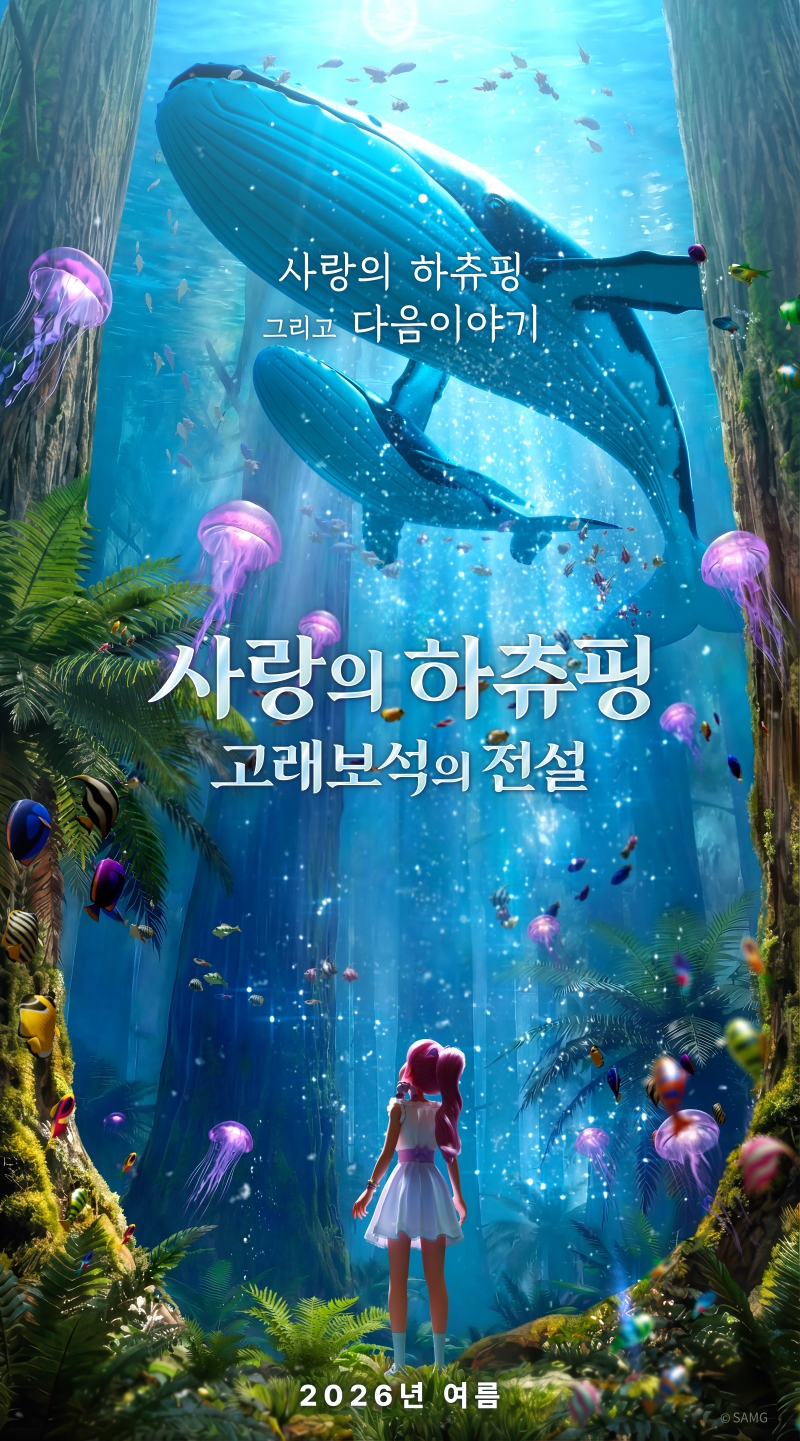
The return of Heartsping raises a question that extends far beyond a single sequel. When Heartsping: Teenieping of Love unexpectedly became one of the highest-grossing Korean animated films, it exposed a possibility the industry had long struggled to prove: a domestically created children’s animation could generate genuine theatrical momentum.
The arrival of Heartsping: The Legend of the Whale Jewel therefore represents more than another installment in a popular series. It functions as a critical moment for the evolving relationship between Korean animation, theatrical storytelling, and long-term franchise building.
A Rare Case Where a Television-Born IP Became a Theatrical Event
Korean animation has historically been strongest in television and character merchandising. Many series successfully cultivate young audiences, yet that popularity often remains confined to broadcast and toy markets. The leap to theatrical success has proven far more difficult.
Heartsping: Teenieping of Love disrupted that pattern. Instead of operating as a limited fan-oriented release, the film achieved significant box-office attention and quickly turned its characters into a cultural trend among young audiences and families.
What made the moment notable was not only the audience size but the way the film entered everyday conversation. Character names and playful expressions linked to the franchise spread across social media, demonstrating that the property had moved beyond a traditional children’s program and into broader pop culture awareness.
A sequel therefore becomes an important indicator of whether that momentum can evolve into a stable theatrical franchise.
The Shift from Emotional Origin Story to Expanding Mythology
The narrative structure of the first film largely focused on the emotional connection between Romi and Heartsping. Its storytelling worked as an origin narrative—an introduction to the characters and the emotional foundation of their relationship.
The upcoming sequel appears to move in a different direction. A mysterious jewel hidden within the ocean and connected to a giant whale suggests a story driven less by introduction and more by exploration. Instead of establishing the characters, the narrative seems prepared to expand the fictional universe surrounding them.
This transition mirrors the pattern often seen in successful global animation franchises. Early entries create emotional familiarity; later installments widen the world and deepen the mythology.
If Heartsping: The Legend of the Whale Jewel follows this trajectory successfully, the franchise could shift from a single popular film into a continuing fantasy universe.
The Ocean Setting as a Signal of Cinematic Scale
Visual environments often reveal how ambitious a sequel intends to be. The imagery associated with the upcoming film places the characters in a vast underwater world filled with glowing light, deep-sea landscapes, and a colossal whale carrying a mysterious jewel.
This setting immediately signals scale. Oceans in fantasy storytelling frequently represent unexplored territories—places where myths and hidden histories emerge. By moving the story into this environment, the film introduces the possibility of encounters with ancient forces or forgotten legends that extend beyond the characters themselves.
From a cinematic perspective, such environments also justify the theatrical format. Large-scale natural worlds offer visual immersion that cannot easily be replicated in television episodes. For Korean animation studios aiming to strengthen their theatrical presence, this kind of visual expansion represents an important creative step.
SAMG Entertainment and the Strategy of Interconnected IP
Behind the Heartsping franchise is SAMG Entertainment, a studio that has steadily built a portfolio of character-driven animation properties. Rather than relying on a single series, the company has focused on creating multiple franchises capable of expanding across television, licensing, and global distribution.
The significance of Heartsping lies in how it fits into this strategy. When a studio successfully moves one of its television properties into theaters, it demonstrates that its intellectual property can operate across different media ecosystems.
Animation today rarely exists within a single format. Successful franchises thrive through a network of storytelling platforms—television series, theatrical films, digital content, merchandise, and international licensing.
The first Heartsping film showed that this ecosystem could translate into theatrical success. The sequel will reveal whether that success can grow into a sustainable cycle.
Children’s Animation as the Foundation of Industry Growth
The impact of films like Heartsping also reflects a broader reality about the animation industry: children’s entertainment often forms the structural foundation of long-term creative growth.
Many globally dominant animation studios began by building strong connections with young audiences. Characters introduced during childhood frequently remain culturally relevant for decades, evolving into enduring franchises that span multiple generations.
South Korea has long possessed the technical talent and production infrastructure to compete internationally. What it has lacked is a consistent pipeline of theatrical animated properties capable of sustaining long-term brand recognition.
If the Heartsping series continues to grow, it could become an example of how domestic children’s animation can anchor a larger creative ecosystem.
The Symbolism of the Whale and the Myth of the Hidden Jewel
Fantasy narratives often rely on symbolic creatures to anchor their mythology. In many storytelling traditions, whales represent ancient knowledge, guardianship, or the memory of the sea itself.
A jewel carried by such a creature introduces the idea of a hidden truth embedded within the world’s natural order. Rather than functioning merely as a magical artifact, the jewel may symbolize a deeper connection between the characters and the environment they explore.
This type of mythological storytelling expands the emotional scope of the narrative. Instead of focusing solely on personal friendship, the story begins to engage with questions of discovery, responsibility, and the unseen forces shaping the characters’ world.
Through that lens, the ocean journey becomes more than an adventure—it becomes a search for meaning within a larger universe.
Korean Animation’s Global Visibility
Another dimension surrounding the film involves the international perception of Korean animation. For decades, Korean studios played crucial roles in animation production pipelines for foreign studios, contributing technical expertise while remaining largely invisible as original creators.
In recent years, however, Korean studios have increasingly focused on building their own intellectual properties capable of global distribution.
Franchises like Heartsping contribute to that effort by demonstrating that Korean-created characters can resonate beyond domestic markets. If the sequel continues to build international interest, it could strengthen the argument that Korea is not only a production hub but also a source of original animated worlds.
The Fragile Nature of Animation Sequels
Sequels carry a delicate responsibility. Audiences expect the emotional familiarity of the original film while simultaneously demanding new ideas and expanded storytelling.
For Heartsping: The Legend of the Whale Jewel, this balance will likely determine its long-term influence. If the film simply replicates the charm of the first installment without deepening its world, the franchise risks stagnation.
Yet if it expands the mythology too aggressively, it may lose the emotional simplicity that made the original accessible to younger viewers.
The success of the sequel may therefore depend on whether it can preserve the heart of the franchise while inviting audiences into a larger narrative horizon.
A Franchise at the Edge of Transformation
The return of Heartsping invites a larger reflection about the direction of Korean animated storytelling. A single hit film can create excitement, but a series of successful films can reshape an industry’s expectations.
Heartsping: The Legend of the Whale Jewel sits precisely at that crossroads. It has the opportunity to demonstrate that Korean animation franchises can evolve from television origins into sustained cinematic worlds.
Whether the ocean adventure ultimately becomes a defining chapter or simply another installment remains uncertain.
What is clear, however, is that the journey of Romi and Heartsping now carries significance beyond their own story. It reflects a broader search for how Korean animation might chart its future—one myth, one world, and one audience at a time.