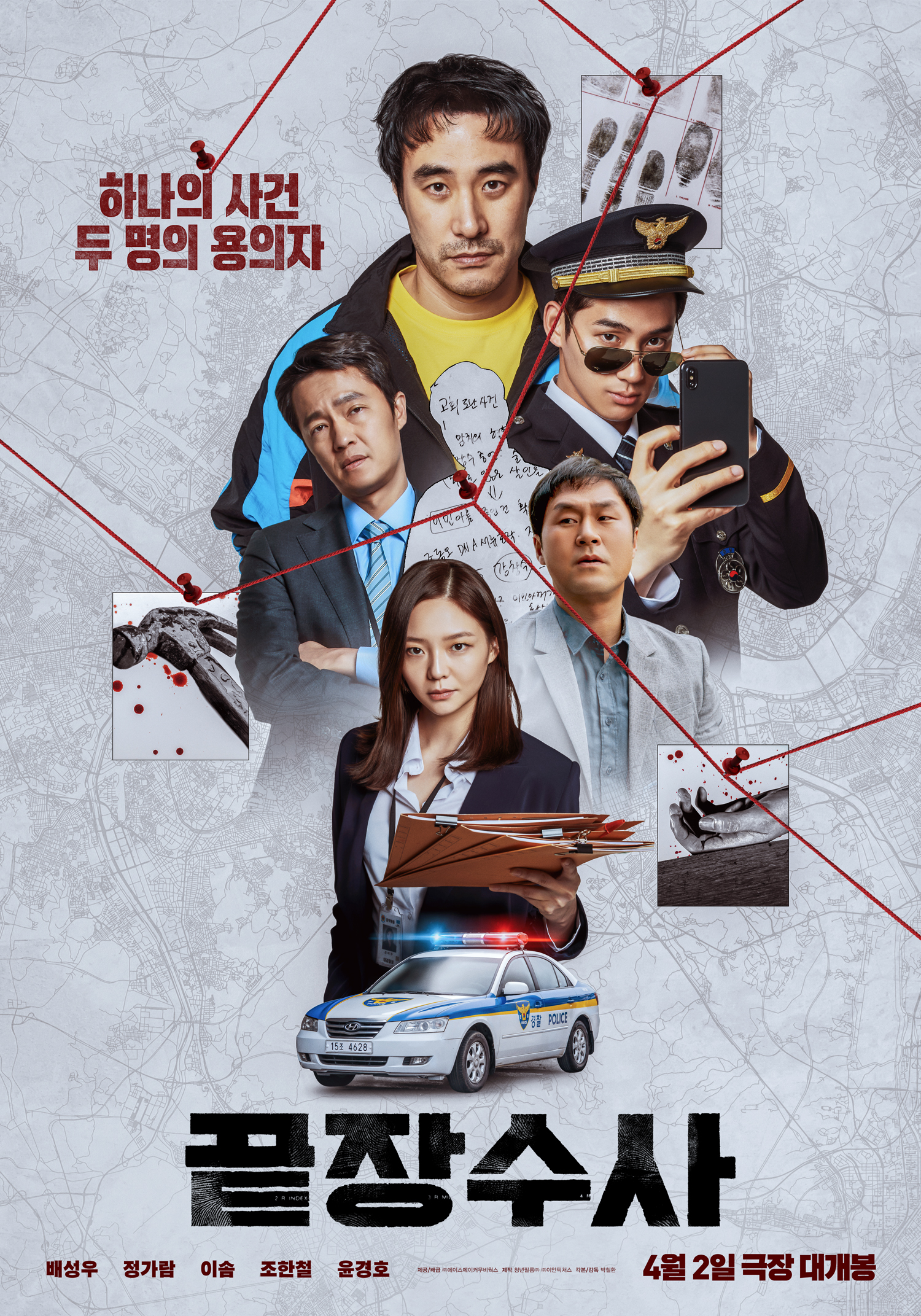
Crime investigation stories often rely on a familiar structure: a murder, a suspect, and the gradual process of uncovering the truth. Yet what makes The Ultimate Duo intriguing is not the crime itself but the unstable relationship at the center of the investigation. When two detectives with incompatible instincts are forced to chase the same answer, the story becomes less about solving a case and more about how distrust, ego, and survival shape the pursuit of justice.
When a Case Becomes a Final Opportunity
For the veteran detective Jaehyuk, the investigation is framed less as routine police work and more as a moment of personal survival. A career pushed to the margins suddenly encounters one last opportunity to prove relevance. That shift transforms the investigation from a procedural task into something closer to a reckoning.
Stories about sidelined detectives are common in crime cinema, but their meaning often lies in the tension between experience and fading authority. A detective who has been removed from the center of power usually carries both institutional knowledge and accumulated frustration. In this situation, solving the case is not simply about identifying the criminal; it is about reclaiming a professional identity that appears to be slipping away.
This dynamic matters because it changes how the investigation unfolds. Decisions become more impulsive, risks become easier to justify, and every clue carries emotional weight beyond its factual value.
An Uneasy Partnership Between Two Opposites
Opposite Jaehyuk stands Jungho, a newcomer whose presence immediately complicates the investigation. Pairing an experienced but disgraced detective with a rookie officer is a narrative pattern often used to generate tension, but the structure works only when their differences represent something deeper than personality clashes.
In The Ultimate Duo, the contrast appears to symbolize two competing ideas about policing. The veteran relies on instinct, improvisation, and accumulated street experience. The newcomer represents procedure, discipline, and the expectations of a system that claims to operate rationally.
When these approaches collide, the investigation itself becomes unstable. Each detective interprets evidence differently, pursues leads through different methods, and evaluates risk from opposing perspectives. Their partnership therefore becomes a test of whether collaboration is possible between two incompatible investigative philosophies.
A Murder Case With Two Suspects — And Too Many Interpretations
The central mystery revolves around a murder connected to two suspects, a structure that introduces immediate ambiguity. Dual suspects shift the focus away from a straightforward whodunit and toward a deeper question: how certainty is constructed during an investigation.
In many crime narratives, investigators follow evidence until the truth becomes clear. When two suspects remain equally plausible, however, the investigation becomes a battle between interpretations rather than a linear search for facts. Every clue can support multiple narratives, and the detectives must decide which version of reality they believe.
That ambiguity matters because it forces the characters to confront their own biases. A detective’s background, instincts, and emotional state inevitably influence which suspect appears more believable. The investigation therefore becomes as much a reflection of the investigators themselves as it is a search for the perpetrator.
Why Ensemble Tension Shapes the Investigation
The presence of a prosecutor, rival investigators, and a key suspect expands the story beyond a simple detective partnership. Each character represents a different relationship to the justice system: legal authority, institutional competition, and the fragile boundary between suspicion and guilt.
When multiple perspectives surround the same case, the investigation becomes a contested space. Prosecutors prioritize evidence that can survive a courtroom. Detectives may prioritize speed and intuition. Rival officers might focus on professional reputation rather than truth.
These competing priorities create friction that pushes the investigation forward. The crime is not solved through a single line of inquiry but through overlapping conflicts between people who all claim to pursue justice.
Why K-Crime Investigation Stories Continue to Evolve
Korean crime dramas and films have steadily shifted away from purely procedural storytelling. Instead of focusing only on clues and deductions, many contemporary works emphasize the emotional and institutional pressures surrounding investigators.
This shift reflects a broader trend in genre storytelling. Modern audiences tend to respond less to mechanical puzzle-solving and more to the human cost of pursuing the truth. Detectives are no longer presented as neutral observers but as individuals shaped by professional failures, political pressures, and moral compromises.
Within that context, a story like The Ultimate Duo gains its relevance not simply from the mystery but from the unstable alliances that form around it. The investigation becomes a stage where personal ambition, loyalty, and distrust constantly collide.
When the Real Question Is Not Who Did It
Mysteries often promise a clear answer at the end: one criminal, one motive, one explanation. Yet stories built around conflicting suspects and uneasy partnerships tend to resist that simplicity.
When investigators approach the same crime with different beliefs, the search for truth becomes fragmented. The case may eventually produce a culprit, but the deeper tension remains unresolved: whether the process of investigation reveals truth or merely constructs the version of truth that investigators are willing to accept.
That ambiguity raises a larger question about crime storytelling itself. If the detectives investigating a case cannot fully trust each other—or even their own assumptions—can the truth ever emerge as something stable?
Or does every investigation inevitably become another interpretation of the same event?