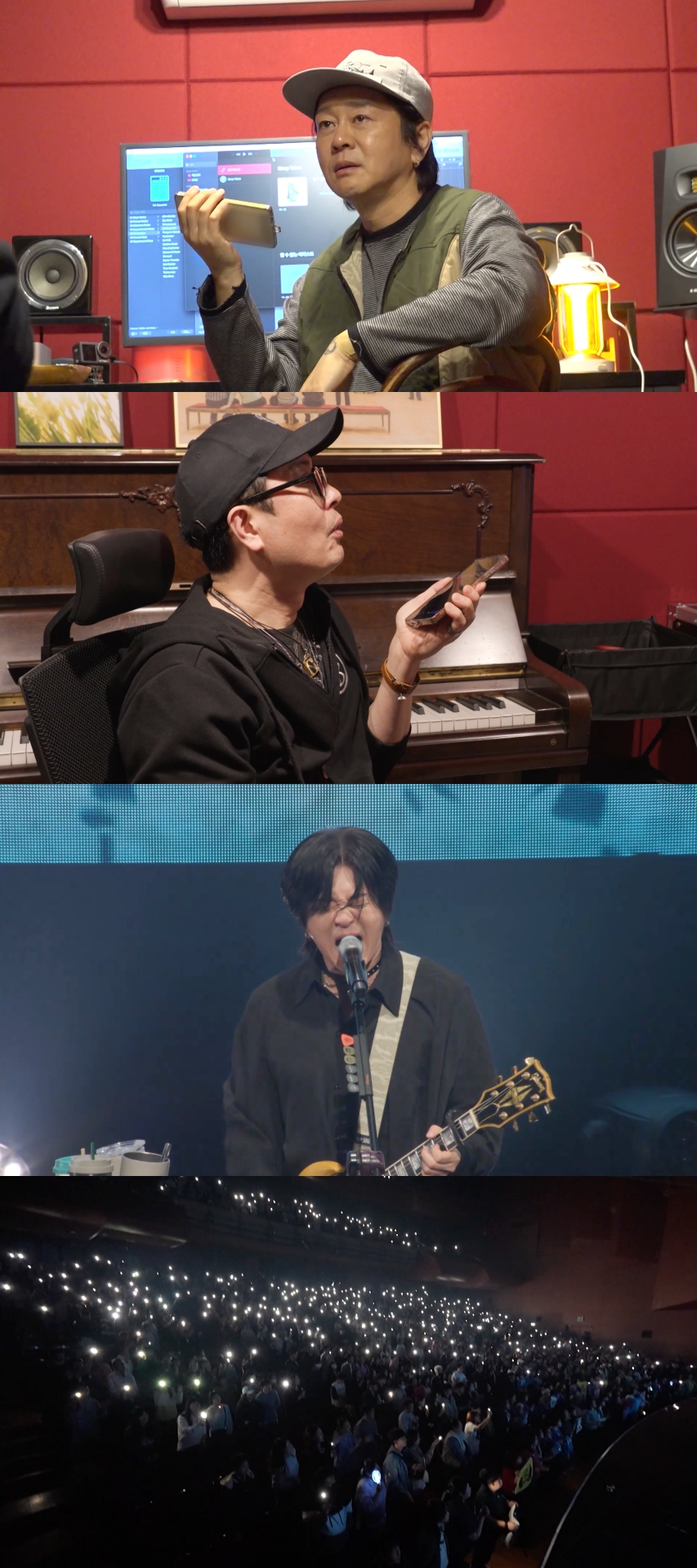
MBC’s Omniscient Interfering View—also widely known as The Manager—works best when it captures the ordinary mechanics behind a public image. In Yoon Do-hyun’s case, that ordinary layer matters more than usual, because the episode is not really about a veteran singer preparing for another concert. It is about what happens when a musician with three decades of history stands onstage again after illness, and why that return changes the meaning of even the most familiar songs.
A long-running band survives by turning memory into something active
There is an easy way to look at a 31-year-old band: as a legacy act living on past hits. But YB has lasted precisely because it resists becoming a museum version of itself. The detail that stands out here is not only the Jeonju concert crowd or the singalong energy. It is the fact that Yoon Do-hyun is still thinking about new songs, still adjusting how a performance should breathe, and still treating the relationship between artist and audience as unfinished work.
That matters because longevity in rock is rarely secured by history alone. A band can have famous songs and still lose urgency. What keeps YB culturally alive is the sense that its catalog is not closed. Even when audiences come for songs they already know, the band seems to approach the stage as a place where its identity must be tested again. That is a very different posture from simply celebrating a career anniversary.
The AI conversation is funny because it reveals a serious instinct
The comic image of Yoon Do-hyun and his manager speaking politely to AI works on the surface as variety-show material. But it also says something unexpectedly revealing about how older artists are adapting to a changing creative environment. The humor comes from exaggerated courtesy. The meaning comes from the fact that they are willing to bring a new tool into an old artistic process without pretending that the tool itself is the artist.
This is where the scene becomes more than a light gag. Many veteran performers are now trapped between two bad options: either rejecting new technology to protect authenticity, or embracing it so eagerly that authenticity starts to feel staged. What makes this moment interesting is its awkwardness. It shows experimentation without surrender. The AI is not replacing artistic judgment; it becomes part of a conversation that remains deeply human, slightly clumsy, and therefore believable.
That kind of clumsiness matters. In a media culture obsessed with frictionless innovation, there is something honest about watching experienced people negotiate unfamiliar tools in their own rhythm. It suggests that artistic continuity does not require purity. Sometimes it requires the confidence to remain yourself while borrowing new methods.
Jeonju is not just another tour stop when a city remembers the band back
A concert city becomes meaningful when it stores an earlier version of the artist. Jeonju appears to function that way for YB. The emotional weight is not simply that the crowd is loud. It is that the band is returning to a place where public memory and private memory overlap. A city once connected to youthful momentum, mass support, and formative live energy now becomes the setting for a later-life return.
That changes the emotional structure of the performance. In many concerts, fans project memory onto the artist. Here, the artist is also projecting memory onto the crowd. The relationship becomes reciprocal. The audience is not just consuming a performance; it is helping restore a timeline that illness, age, and passing years might otherwise have broken.
This is why nostalgia alone is not enough to explain the power of the scene. Nostalgia freezes the past as something untouchable. What happens on a stage like this is different. The past is not frozen; it is reactivated. The old memory becomes a way to measure survival in the present.
The familiar setlist means something different after vulnerability enters the story
Songs such as “Peppermint Candy,” “Love Two,” “A Flying Butterfly,” and “White Whale” already carry strong emotional associations for Korean listeners. In another setting, performing them might simply confirm YB’s established place in Korean rock history. But after Yoon Do-hyun’s battle with cancer, these songs inevitably sound different. The voice is no longer just a vehicle for hits. It becomes evidence.
That is why the audience response matters so much. The mass singalong is not only excitement. It feels like recognition. Fans are answering not just the songs, but the fact of his continued presence inside them. When a singer returns after serious illness, performance acquires a second layer: every sustained note carries the story of having made it back to the stage at all.
This does not mean the music becomes sentimental. In fact, the opposite may be true. Survival can sharpen performance by stripping away decorative emotion. A voice that has gone through physical uncertainty often sounds more grounded, not because it is technically different in every measure, but because listeners hear stakes in it. The songs stop being mere classics and start feeling like renewed claims on life.
YB’s legacy also comes from how it treats the stage as a shared platform
Another revealing detail is the mention of Yoon Do-hyun giving younger artists opportunities on YB concert stages. That is one of the clearest signs that a band sees itself as part of a living musical ecosystem rather than as a sealed monument to its own success. Legacy, in that sense, is not just about endurance. It is about circulation.
This matters because Korean music scenes often get narrated through generational breaks: one era ends, another begins, and each new wave is asked to replace the last. YB represents a different model. It suggests that continuity can be created through mentorship, invitation, and coexistence. A senior act remains relevant not by blocking the future, but by helping stage it.
That perspective makes the Jeonju performance more than a triumphant return story. It places Yoon Do-hyun in a broader role. He is not only a singer reclaiming his own stage. He is also part of the infrastructure that helped define what that stage could mean for others.
Rock, in this case, looks less like rebellion than resilience
For a long time, rock identity was built around loudness, defiance, and edge. Those qualities are still present in YB’s image, but what feels more important now is resilience. The louder message is no longer rebellion against rules; it is persistence against erosion. Time erodes bands. Illness erodes certainty. Repetition erodes meaning. Yet this episode seems to argue that performance can still cut through all three.
That may be the deepest reason Yoon Do-hyun continues to matter. He is not standing in for a fantasy of eternal youth. He represents something harder and more durable: the ability to carry history without being crushed by it. The stage becomes the place where scars are not hidden, but absorbed into the performance until they become part of its force.
And that may be why the concert energy feels so intense. Audiences are not only reacting to technical skill or famous choruses. They are responding to a form of presence that has been tested and returned.
The real question, then, is not whether YB can still deliver a powerful concert. It is whether Korean music television can still create enough space for this kind of meaning-rich performance to be seen as more than a nostalgic spectacle. When an artist’s comeback is shaped by memory, illness, technology, mentorship, and live communion all at once, the stage starts to say something larger than “the legend is back.” It asks what it means for a public voice to remain alive, changed, and still unmistakably its own.