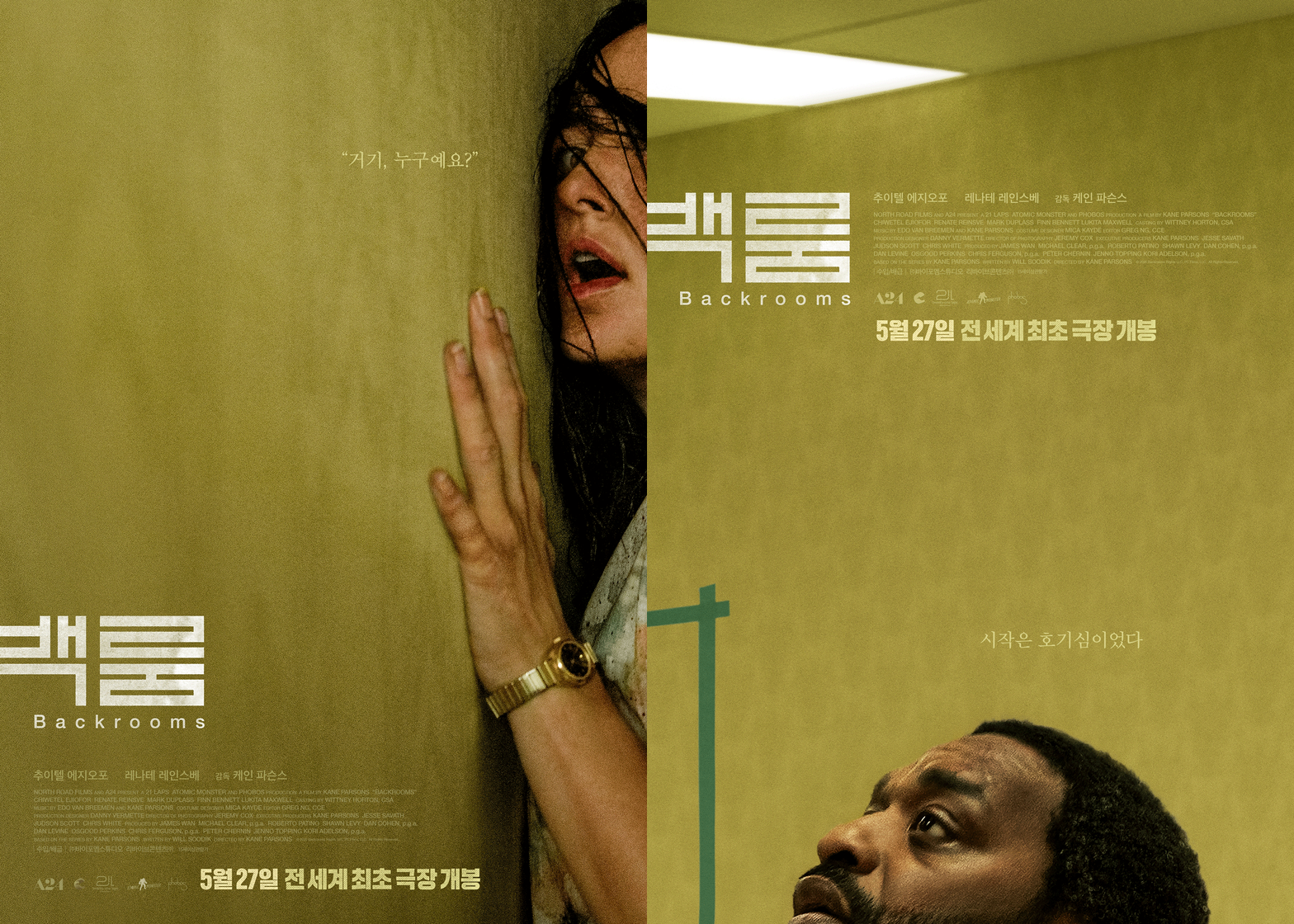
The most unsettling aspect of Backrooms is not the possibility of monsters hiding in the dark. It is the feeling that the space itself has stopped obeying reality. Endless yellow walls, buzzing fluorescent lights, and identical empty rooms create a kind of horror that feels emotionally familiar even before anything dangerous appears. That familiarity explains why Backrooms evolved from an online curiosity into one of the internet’s most recognizable modern horror myths.
What makes the film adaptation especially significant is the way it treats digital folklore as cinematic material rather than disposable internet content. Horror cinema has often borrowed from urban legends, creepypastas, and online paranoia, but Backrooms arrives from a different cultural environment. Its popularity was built through algorithm-driven repetition, fragmented storytelling, and communal imagination. The film therefore carries a difficult challenge: preserving the strange emotional texture of an internet phenomenon while transforming it into something immersive enough for theatrical viewing.
The Fear of Endless Space Has Replaced the Fear of the Unknown Creature
Traditional horror often relies on the hidden threat. Audiences fear what might suddenly emerge from darkness, silence, or isolation. Backrooms shifts that focus toward the architecture itself. The yellow rooms are frightening precisely because they appear ordinary. Office carpeting, fluorescent lighting, and repetitive layouts resemble places people already know, yet every familiar detail feels subtly wrong.
This approach matters because modern anxiety increasingly comes from overstimulation rather than absence. Endless scrolling, repetitive digital spaces, and algorithmic sameness have created environments where people feel psychologically trapped even while constantly moving. Backrooms transforms that sensation into physical form. The maze does not simply imprison its characters. It reflects the emotional exhaustion of contemporary life.
The visual design also rejects the polished complexity associated with large-scale studio horror. Instead of relying on excessive visual noise, the setting weaponizes emptiness. The repetition becomes oppressive. Every hallway appears interchangeable, which removes the audience’s ability to orient themselves spatially. That disorientation creates tension without requiring constant shocks.
The result is closer to existential horror than conventional supernatural storytelling. Escaping becomes psychologically impossible because the environment itself denies logic. In that sense, Backrooms belongs to the same broader evolution of horror that turned houses, rituals, and grief into living systems of dread in films produced by studios like A24.
Kane Parsons Represents a Generation That Learned Cinema Through the Internet
The fascination surrounding Kane Parsons is not simply about his age. Hollywood has always celebrated young directors, but Parsons represents a different creative pathway entirely. He did not emerge through film school prestige or independent festival circuits. His visual language was formed inside online platforms where short-form experimentation, viral momentum, and audience interaction shaped storytelling in real time.
That distinction may ultimately matter more than the film itself. Parsons belongs to a generation of creators who understand fear through digital rhythm. Online horror succeeds because it creates lingering uncertainty rather than complete explanations. Viewers participate by imagining missing details, decoding visual clues, and expanding theories together. The internet transformed horror into a collaborative emotional experience.
A theatrical adaptation risks losing that ambiguity because cinema traditionally demands narrative clarity. If Backrooms becomes overly explanatory, it could undermine the very mystery that made the original concept powerful. But if Parsons preserves the fragmented unease of the online mythology, the film may demonstrate how internet-native storytelling can evolve without sacrificing its identity.
His collaboration with producers associated with franchises like The Conjuring and series such as Stranger Things creates an interesting tension between mainstream structure and experimental atmosphere. One side prioritizes accessibility and audience scale. The other thrives on abstraction and uncertainty. Backrooms exists at the intersection of those opposing instincts.
The Internet Has Already Changed What Audiences Consider “Cinematic”
For decades, Hollywood largely treated internet culture as secondary material. Viral videos, creepypastas, and gaming aesthetics were often adapted awkwardly because studios misunderstood why audiences connected with them in the first place. Backrooms arrives at a moment when that hierarchy has started collapsing.
Audiences no longer separate “internet horror” from “real cinema” as sharply as before. Younger viewers experience visual storytelling across YouTube videos, livestreams, games, TikTok edits, and theatrical releases simultaneously. Emotional impact matters more than medium legitimacy. A low-resolution hallway video can produce more dread than a multimillion-dollar effects sequence if it captures the right psychological atmosphere.
That shift explains why Backrooms feels culturally important beyond its plot. The film tests whether internet-born aesthetics can survive expansion into large-scale production. Found-footage horror once carried similar skepticism before eventually reshaping mainstream genre filmmaking. Backrooms may represent the next stage of that evolution.
The choice to preserve minimalism is especially crucial. Many studio adaptations overcomplicate simple concepts in pursuit of scale. Yet the original terror of the Backrooms mythology comes from limitation. The empty space forces viewers to project fear into silence and repetition. If the film understands restraint, it could prove that horror does not require constant escalation to remain emotionally overwhelming.
Why the Yellow Rooms Feel More Disturbing Than Traditional Haunted Spaces
Haunted houses traditionally rely on history. They are frightening because something terrible once happened there. The Backrooms operate differently. The rooms feel terrifying because nothing appears to have happened at all.
That absence creates a uniquely modern kind of unease. Empty office-like environments evoke forgotten commercial spaces, abandoned workplaces, and transitional architecture stripped of human meaning. They resemble places designed for efficiency rather than emotional connection. The horror therefore emerges from impersonality.
This is why the yellow corridors linger in memory even when viewers cannot fully explain them. The imagery touches a subconscious fear of existing inside systems too large and repetitive to escape. Endless rooms become symbolic of emotional isolation within standardized modern environments.
The fluorescent lighting intensifies this effect. Darkness traditionally hides danger, but Backrooms removes darkness almost entirely. The constant brightness creates exposure rather than concealment. Characters cannot disappear into shadow, yet they still cannot understand the space surrounding them. That contradiction destabilizes audience expectations.
In many ways, the setting resembles a nightmare generated by administrative reality. Carpets, walls, and lighting are not inherently frightening objects, yet repetition transforms them into something psychologically hostile. Horror emerges not from visual chaos but from unbearable sameness.
The Film’s Success May Depend on What It Refuses to Explain
One of the defining strengths of the Backrooms mythology is its resistance to complete interpretation. Online communities expanded the concept through fragments, invented “levels,” distorted recordings, and incomplete theories. The uncertainty became part of the appeal.
Cinema, however, often struggles with ambiguity because audiences expect resolution. Large-scale productions frequently feel pressured to define mythology, identify threats, and establish coherent rules. That instinct can weaken atmospheric horror by replacing emotional uncertainty with informational clarity.
If Backrooms attempts to answer every question, the experience could become smaller rather than larger. Mystery allows fear to expand beyond the screen because viewers continue imagining possibilities afterward. Overexplanation closes that imaginative space.
The most effective version of the film would therefore treat narrative less as a puzzle to solve and more as an emotional condition. The maze should feel incomprehensible not because the audience lacks information, but because comprehension itself becomes impossible inside the environment.
That approach would align Backrooms with a growing movement in contemporary horror where emotional logic matters more than literal explanation. Fear becomes immersive when viewers feel trapped alongside the characters instead of merely observing a sequence of events.
A Generation Raised Online May Finally Be Defining Horror on Its Own Terms
The rise of Backrooms suggests that younger audiences are no longer waiting for traditional studios to define cultural mythology for them. They are building their own shared symbols through collaborative internet spaces and then watching those ideas migrate into mainstream entertainment.
That process changes how horror evolves. Older genre traditions often emerged from folklore tied to specific places, religions, or communities. Internet horror spreads differently. It is decentralized, endlessly modified, and shaped collectively through participation. The mythology never fully belongs to a single creator.
This makes Parsons’ role particularly fascinating. As both fan and filmmaker, he occupies an unusual position between community storytelling and studio production. He is adapting a mythology he helped popularize rather than merely acquiring existing intellectual property.
Whether Backrooms becomes a critical success or a divisive experiment, its existence already signals a larger transition inside horror cinema. The industry is beginning to acknowledge that online imagination is not separate from cinematic culture anymore. It is increasingly where cinematic culture begins.
The lingering question is whether theatrical storytelling can preserve the strange emotional intimacy that made internet horror feel personal in the first place. Once a myth enters mainstream production, does it become more powerful through scale, or does it lose the unsettling uncertainty that allowed audiences to inhabit it themselves?