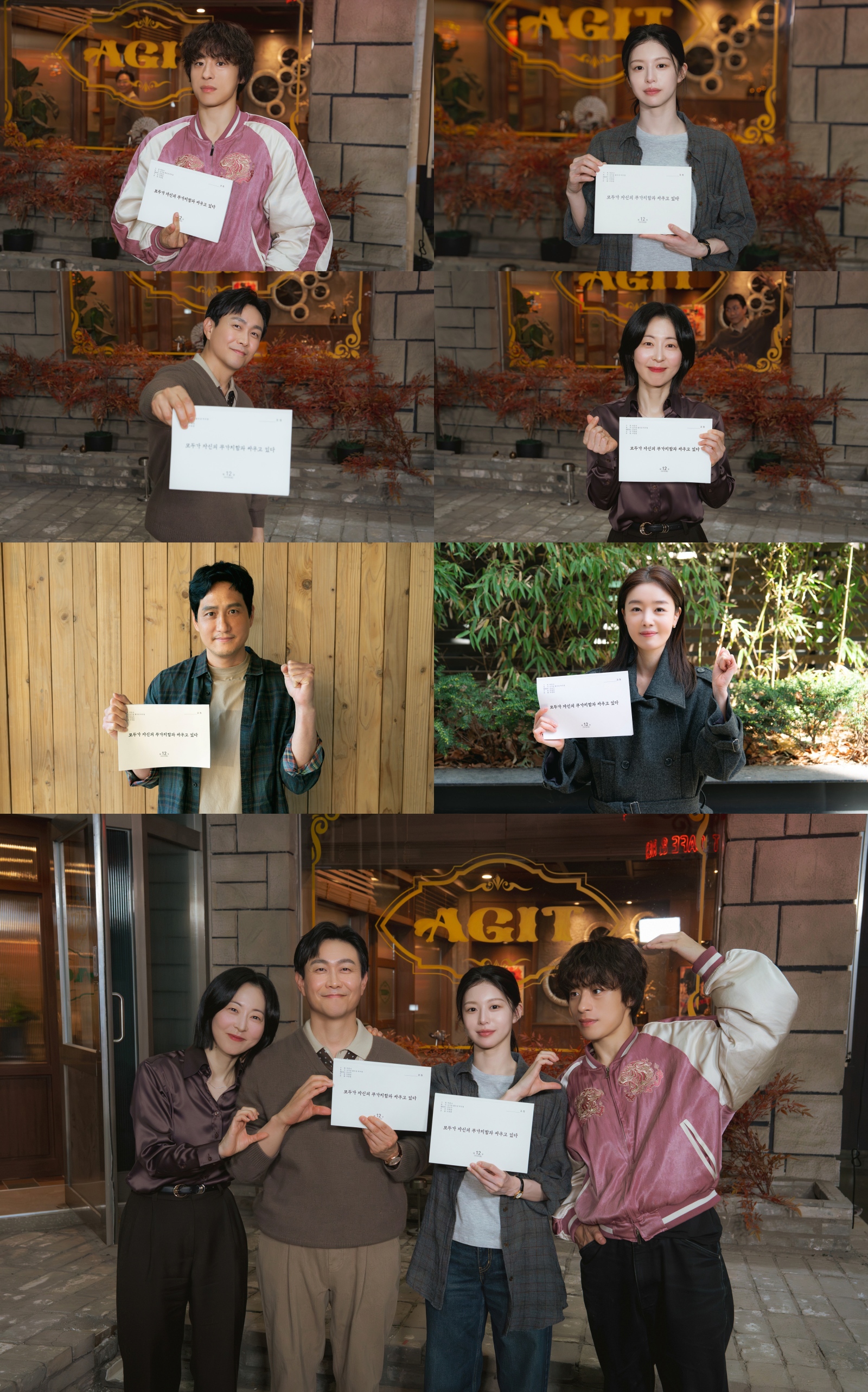
Most television finales are structured around resolution. Characters change, conflicts close, and viewers are guided toward emotional certainty. JTBC’s We Are All Trying Here approached its ending differently. Rather than promising victory over insecurity, the series spent its final stretch questioning whether feelings of inadequacy can ever truly disappear at all.
That difference explains why the drama resonated so deeply with audiences despite its understated storytelling. The series never treated “worthlessness” as a temporary obstacle before happiness arrived. Instead, it portrayed insecurity as something woven permanently into everyday existence — a condition people learn to survive alongside rather than defeat completely.
Its final episode arrives carrying that emotional tension to the very end.
Hwang Dong-man’s dream mattered because it was never purely about success
Throughout the drama, Hwang Dong-man represented a particular kind of exhaustion rarely explored honestly in television narratives: the exhaustion of enduring failure for too long. His twenty-year struggle to complete a single film was not framed as noble artistic suffering, but as something humiliating, unstable, and emotionally consuming.
That is what made his story compelling. The series refused to romanticize persistence.
Even after finally receiving an opportunity to direct his film, Dong-man’s emotional instability remained intact. The closer he moved toward success, the more fragile his sense of self appeared to become. The finale preview emphasizing his emotional collapse after losing the words that defined his “source of existence” reveals how unstable identity becomes when a person has attached their worth entirely to one dream.
In many dramas, achieving the goal resolves the emotional conflict. We Are All Trying Here suggests the opposite possibility: sometimes success only exposes how much emotional damage accumulated during the pursuit itself.
That idea gives the finale unusual emotional weight. The question is no longer whether Dong-man can finish the film. The deeper question is whether completing it will actually repair anything inside him.
The drama transformed personal insecurity into collective solidarity
One of the series’ strongest creative decisions was its refusal to isolate emotional suffering. Although each character experienced insecurity differently, the drama consistently connected those struggles together rather than separating them into individual psychological battles.
Gu Kyo-hwan’s farewell message captured that emotional philosophy perfectly. His reflection about recognizing himself in viewers’ reactions speaks to the drama’s broader emotional achievement: it created identification without idealization. The audience was not encouraged to admire the characters as exceptional people. Instead, viewers recognized parts of themselves inside their contradictions, jealousy, failures, and emotional exhaustion.
That emotional recognition transformed the series from character drama into something closer to collective emotional testimony.
The phrase “All for One, One for All” becomes meaningful in that context. It is not heroic in the traditional sense. It suggests survival through mutual recognition rather than individual triumph. The series repeatedly implied that people endure emotional collapse not because they become strong alone, but because they realize others are struggling in similar ways.
That message feels especially significant in a cultural climate where self-worth is increasingly tied to visible achievement and constant self-optimization.
The female characters resisted becoming emotional symbols
Many healing dramas unintentionally reduce women into emotional support systems for male protagonists. We Are All Trying Here avoided that trap by allowing its female characters to carry equally unresolved emotional contradictions.
Go Youn-jung’s Byun Eun-a fought against abandonment anxiety while simultaneously trying to project emotional strength. Her growth never appeared linear or inspirational in a conventional sense. Instead, the character embodied how exhausting emotional self-protection can become over time.
What made Eun-a compelling was not resilience itself, but the cost of constantly performing resilience.
Similarly, Kang Mal-geum’s Go Hye-jin complicated the familiar “strong wife” archetype. Her emotional authority came not from perfection, but from her willingness to confront disappointment without losing emotional clarity. She understood weakness without becoming consumed by it.
Han Sun-hwa’s Jang Mi-ran offered another variation entirely. Her sincerity often appeared emotionally impulsive rather than strategically wise, yet the series treated emotional honesty as valuable precisely because it resisted the calculated emotional performances surrounding her.
Together, these characters prevented the drama from collapsing into a single emotional perspective. Everyone experienced inadequacy differently, which made the series feel emotionally expansive instead of psychologically repetitive.
The series understood that shame often survives even after tragedy
Perhaps the most devastating emotional thread belonged to Park Hae-joon’s Hwang Jin-man. His guilt after losing his daughter extended beyond grief itself. What haunted him was the realization that part of him continued functioning creatively even after unbearable loss.
That emotional contradiction — feeling ashamed of one’s own survival instincts — is rarely explored with such quiet honesty.
The line, “I may be worthless, but I will keep living until I die of old age,” captures the drama’s emotional philosophy more accurately than any uplifting speech could. It rejects redemption narratives entirely. There is no promise that life becomes meaningful again. There is only persistence.
Yet strangely, that refusal to romanticize healing becomes comforting in its own way.
The series repeatedly argued that human value does not emerge from emotional perfection, productivity, or successful recovery. It exists even inside contradiction, bitterness, exhaustion, and emotional incompleteness.
That may be why the drama lingered so strongly with viewers. It allowed people to imagine existence without requiring emotional victory first.
Its ending matters because it leaves emotional uncertainty intact
Many dramas mistake ambiguity for incompleteness. We Are All Trying Here uses ambiguity more carefully. The series understands that emotional struggles tied to self-worth rarely end cleanly. There is no final scene capable of permanently resolving insecurity, envy, loneliness, or shame.
By refusing neat emotional closure, the finale preserves the drama’s central honesty.
The characters may continue surviving. They may continue failing. They may continue searching for reasons to endure themselves. But the series ultimately suggests that value does not appear only after transformation. Sometimes it exists quietly inside the act of continuing despite emotional exhaustion.
That perspective may explain why audiences connected so intensely with the show. In a world obsessed with visible success and emotional certainty, We Are All Trying Here dared to imagine people who remain unfinished.
And perhaps that is what made them feel real.
'Entertainment & Cultural Analysis' 카테고리의 다른 글
| Why Dive Into You Reflects a New Phase of K-Drama Globalization (1) | 2026.05.27 |
|---|---|
| Why The Purge List Could Turn Joseon Revenge Into a Moral Battlefield (0) | 2026.05.25 |
| Why We Are All Trying Here Needed Music to Complete Its Emotional Story (0) | 2026.05.24 |
| Why Backrooms Reflects a New Era of Internet-Born Horror (0) | 2026.05.23 |
| Why Webtoon Adaptations No Longer End With a Single Drama (0) | 2026.05.22 |