
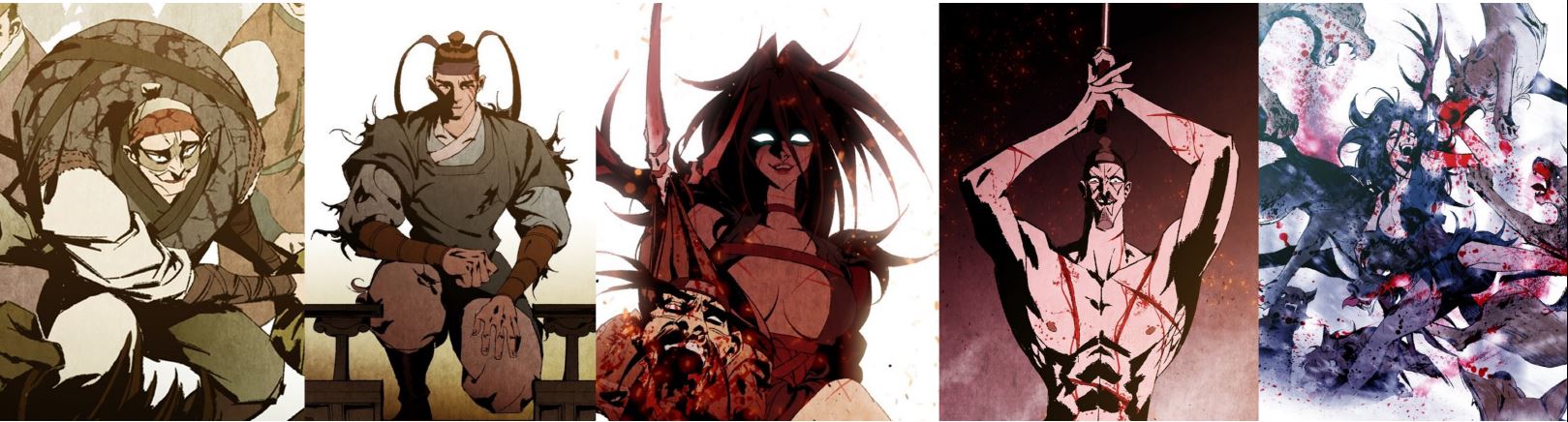
Revenge stories often become predictable when violence is treated as justice wearing a darker costume. The Purge List matters because its central idea is not simply revenge, but the act of naming who deserves to die. That turns action into judgment, and judgment into a political weapon.
A death list makes violence feel bureaucratic
Han Myeong-hoe is compelling because he does not represent chaos. He represents order corrupted from within. A list is cold, organized, and repeatable; it removes hesitation from murder by turning death into procedure.
That matters because historical action works best when sword fights are not only physical. If the film understands the list as a system rather than a prop, its violence can expose how power survives by making cruelty look administrative.
Lee Hwa’s revenge is not just personal loss
Lee Hwa’s journey can easily be read as a victim’s retaliation. But the stronger interpretation is that she becomes the answer to a political structure that erased her life before she had the power to define it.
Her choice to walk a darker path matters because revenge changes the person who carries it. The real tension is not whether she can kill Han Myeong-hoe, but whether she can avoid becoming another name-maker in a world ruled by death lists.
A female assassination group changes the genre’s center of gravity
Korean historical action has often placed women near the emotional cost of power, while men occupy the machinery of ambition. The presence of Hwa Jeop Mong suggests a different structure: women are not only survivors of political violence, but organized actors within it.
That shift matters because it can move the story away from decorative tragedy. If handled seriously, the assassins can become a counter-history, asking what resistance looks like when official records belong to the winners.
Suyang’s ambition gives revenge a larger shadow
Suyang is not merely a rival force in the background. His ambition creates the world in which people like Han Myeong-hoe can thrive. A throne does not need to swing a sword when others are willing to build its path with blood.
This matters because revenge aimed at one strategist may still leave the larger machine untouched. The film’s deeper question may be whether killing the architect changes history, or only clears space for another architect to rise.
Global historical action needs more than spectacle
The film’s international ambition will only matter if its style serves its ideas. Hard-boiled action can bring weight, impact, and brutality, but spectacle alone risks flattening Joseon history into exotic violence.
The stronger route is restraint with purpose. Blood should not simply prove intensity; it should reveal how power stains everyone who enters its logic.
The most interesting revenge may be the one that fails to stay pure
The Purge List has the ingredients of a large-scale action film, but its real potential lies in moral contamination. A girl seeks justice for what was taken from her, yet the method available to her is the same language used by those who destroyed her world.
That contradiction is where the story can become more than a revenge saga. When death is written down before it happens, who truly owns the violence: the person holding the blade, the person writing the list, or the system that taught them both to believe in it?