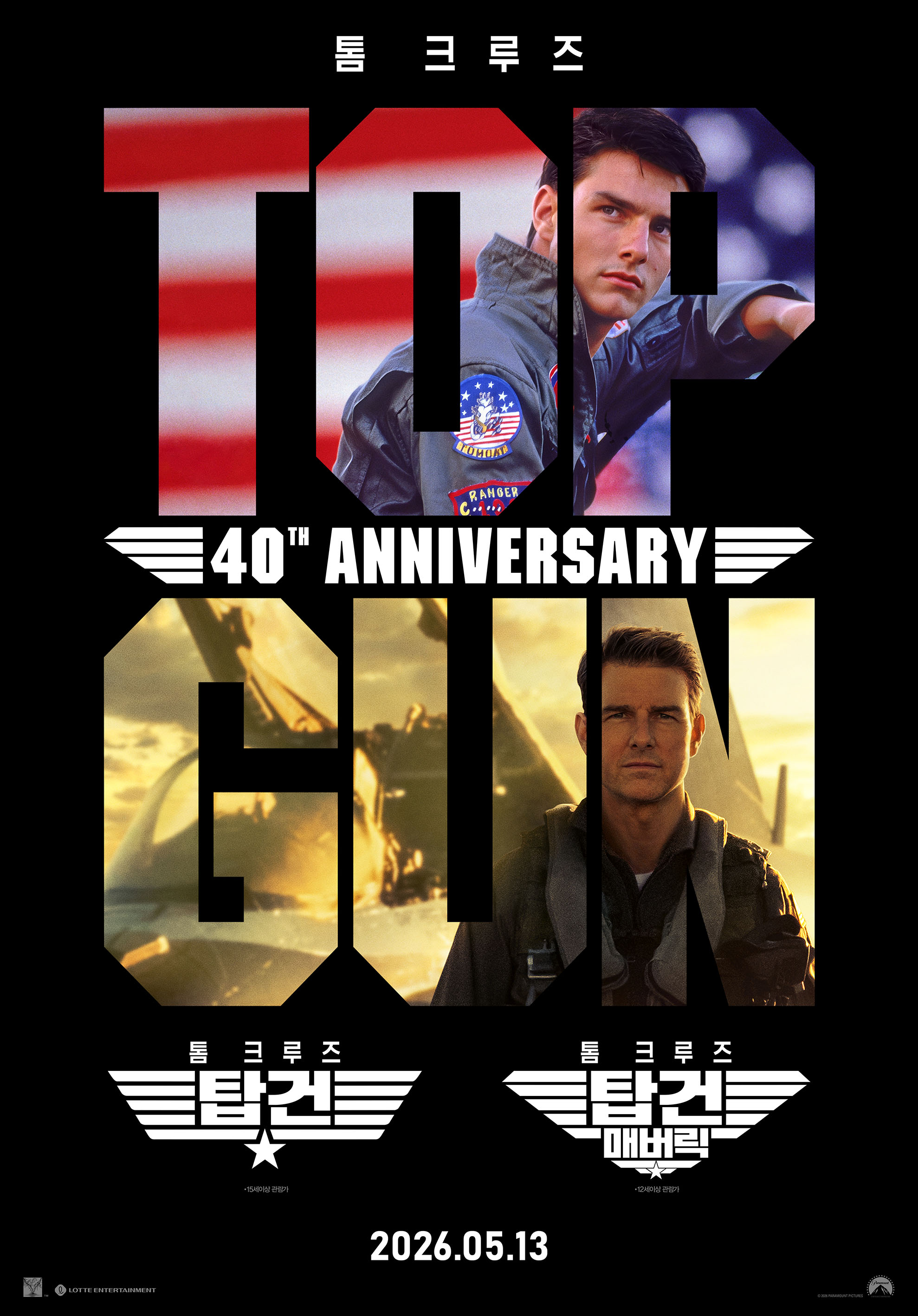
A 40-year gap between TOP GUN and TOP GUN: MAVERICK does more than connect two successful films. It exposes how a single cinematic idea—speed as identity—can survive cultural shifts without remaining unchanged. Watching them together is less about revisiting a franchise and more about observing how spectacle evolves when the meaning of heroism itself becomes unstable.
Speed was once attitude; now it carries consequence
In TOP GUN, speed is an extension of personality. It reflects ego, competition, and the desire to dominate space. The film builds its appeal around immediacy—quick reactions, impulsive decisions, and the thrill of pushing beyond limits simply because those limits exist. The narrative does not question that impulse very deeply. It celebrates it.
TOP GUN: MAVERICK reframes that same impulse as something heavier. Speed is no longer just a tool for proving superiority. It becomes something that accumulates memory—of mistakes, of losses, of time passing. Flying fast is still exhilarating, but it now exists alongside the awareness that not everything can be outrun. That shift transforms the sequel from a repetition into a reinterpretation.
What matters here is not just character growth. It is the franchise’s ability to redefine what its core experience represents. The same physical sensation—velocity—moves from being a symbol of freedom to something closer to responsibility.
Maverick works because he resists becoming fully compatible with his era
Pete “Maverick” Mitchell persists as a cultural figure not because he remains unchanged, but because he never fully adapts. In the original film, that resistance looks like rebellion. In the sequel, it looks like friction. He is no longer the future of aviation; he is the part of the past that refuses to disappear.
That distinction is crucial. Many legacy characters are preserved by being frozen. Maverick is preserved by being out of place. His value in TOP GUN: MAVERICK comes from the fact that systems are moving beyond him, yet still cannot replicate what he represents. He embodies instinct, risk, and judgment—qualities that are harder to quantify and therefore harder to replace.
This creates a different kind of tension than the original film. Instead of asking whether Maverick can prove himself, the sequel asks whether proving himself still matters in the same way. The answer is deliberately unresolved, which is precisely why the character continues to feel relevant.
The franchise turns machines into emotional pressure, not just spectacle
Aircraft in these films are not simply visual attractions. They function as environments that expose human limits. In TOP GUN, the jets amplify competition and ego. They push characters into situations where confidence can quickly become vulnerability.
In TOP GUN: MAVERICK, that same environment becomes more introspective. The machines still demand precision, but they also highlight the fragility of experience. The pilots are not just trying to win; they are trying to justify their place in a system that increasingly values efficiency over individuality.
This is why the action remains compelling even after decades. The films do not rely solely on scale. They rely on the relationship between human decision-making and mechanical constraint. The spectacle works because it is always tied to what can go wrong.
Image-making is the franchise’s hidden discipline
The enduring power of TOP GUN lies in how carefully it constructs its visual identity. The film does not overwhelm the viewer with complexity. Instead, it refines a set of repeating images—sunlight, metal, motion, controlled environments—until they become symbolic.
At first glance, this can be mistaken for style without depth. But the repetition is intentional. It builds a world where appearance is inseparable from meaning. The way characters look, move, and occupy space becomes part of how they are understood.
TOP GUN: MAVERICK inherits that visual language but alters its purpose. The images remain recognizable, yet they carry a sense of distance. What once felt immediate now feels layered with time. The same iconography that once defined confidence now hints at endurance.
The theatrical experience is not optional for this kind of storytelling
These films are often described as “made for the big screen,” but that phrase can feel empty when applied too broadly. In this case, it is precise. The storytelling depends on spatial awareness, sound intensity, and physical immersion.
Speed needs scale to register fully. Sound needs volume to translate force. Movement needs space to be understood as risk rather than abstraction. Without those elements, the films still function, but they lose part of their logic.
This is why revisiting TOP GUN and TOP GUN: MAVERICK in a theater changes the experience. It restores the conditions under which their central ideas—control, danger, precision—become tangible rather than conceptual.
Excellence remains visible here in a way modern cinema often avoids
One of the reasons the franchise continues to resonate is its belief in visible skill. The films present competence as something that can be observed, tested, and proven under pressure.
This stands in contrast to many contemporary narratives, where expertise is either abstract or undermined by irony. In TOP GUN, ability is direct. It has weight. It has consequence. The audience does not need explanation to understand its significance.
That clarity gives the films a certain durability. They offer a vision of excellence that is not detached from risk. Success is never guaranteed, and failure is never trivial. The result is a form of spectacle that feels grounded even at its most exaggerated.
What remains after four decades is not just excitement, but a question
Watching TOP GUN and TOP GUN: MAVERICK together reveals how little the core appeal has changed and how much its meaning has shifted. The thrill of speed persists. The context around that thrill becomes more complex.
The films no longer simply ask who can fly faster or better. They begin to ask what that ability represents in a world that is changing faster than the individuals within it. Is mastery still enough? Or has the definition of value moved somewhere less visible?
The answer is left open, which may be the most important choice the franchise makes. It allows the audience to decide whether the need for speed is still about freedom—or whether it has become something closer to proof that human presence still matters.