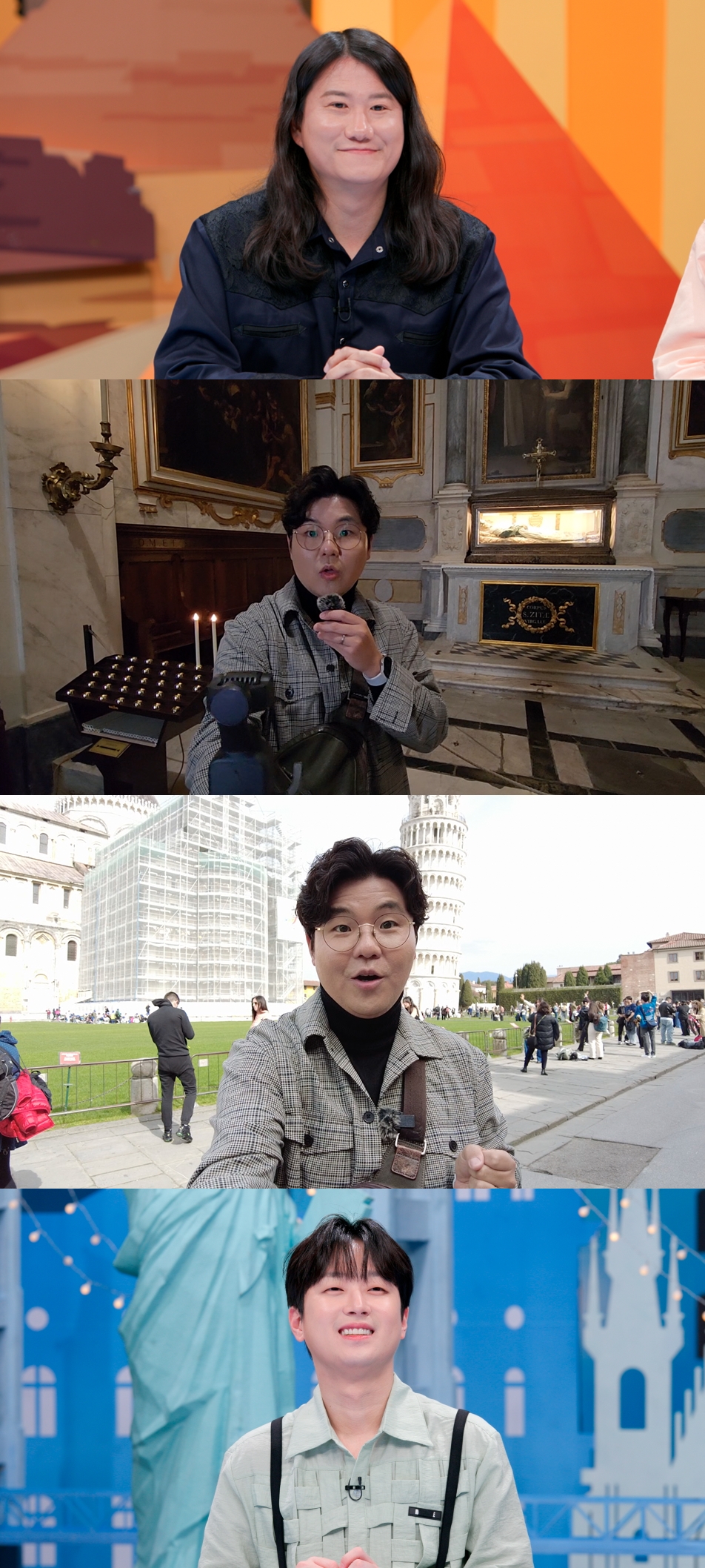
Travel shows often sell movement as freedom, but the more interesting question is what kind of freedom travel actually creates. In Talk Pawon 25 O’Clock, Im Woo-il’s extreme walking-based travel style is not just a comic detail. It exposes a tension inside modern tourism: the desire to experience more while spending less, moving slower, and resisting the packaged convenience that usually defines travel content.
Frugality Becomes a Character, Not Just a Habit
Im Woo-il’s image as a famously frugal entertainer matters because it gives the trip a clear point of view. Walking nearly every route is funny on the surface, but it also turns travel into endurance, discipline, and negotiation with the city.
This matters because many travel programs treat destinations as consumable highlights. His style pushes against that rhythm. A traveler who walks too much cannot simply collect landmarks; he has to feel distance, fatigue, streets, weather, and inconvenience.
Lucca Works Because It Resists the Obvious Italian Fantasy
Lucca is not the Italy most viewers instinctively imagine. It does not rely on the instant visual power of Rome, Venice, or Florence. Its appeal comes from being layered, quiet, and historically dense.
That makes it a useful setting for a program like Talk Pawon 25 O’Clock. The city invites a slower gaze, where Puccini’s legacy, old religious architecture, and preserved remains are not separate tourist points but signs of how memory survives inside ordinary urban space.
The Mummy Inside San Frediano Changes the Tone of the Journey
The preserved body inside the Basilica of San Frediano gives the episode a darker and more reflective texture. Travel entertainment usually prefers beauty, food, and spectacle, but a mummy forces the viewer to confront time in a physical form.
This matters because it prevents Lucca from becoming merely “charming.” The city becomes a place where faith, death, history, and preservation coexist. The travel segment gains weight because the past is not abstract; it is still present, visible, and unsettling.
Pisa Becomes More Than a Photo Spot When Labor Enters the Frame
Pisa is globally recognizable because of its leaning tower, but the more interesting part is the movement from landmark tourism to food labor. Making fresh pasta and handling rabbit meat shift attention from seeing Italy to participating in a local food culture.
That shift matters. It reminds viewers that cuisine is not just taste or aesthetic pleasure. It is technique, repetition, family memory, and physical work. The episode becomes stronger when it treats food not as decoration but as a cultural practice.
The Leaning Tower Still Matters Because It Keeps Changing
The Leaning Tower of Pisa is one of those landmarks that can feel exhausted by overexposure. Yet measuring its current tilt reframes it as an unstable object rather than a frozen postcard.
That instability is the key. The tower remains famous not because it is perfect, but because it visibly carries a problem. Its imperfection is the reason people return to it, photograph it, and reinterpret it across generations.
The Bigger Meaning Is About Slower Travel in a Fast Content Era
What stands out is not simply that the episode visits Italy, Vietnam, and Australia. The more meaningful point is how the show continues to test whether virtual travel can still feel specific in an age of endless destination content.
Im Woo-il’s walking habit sharpens that question. It suggests that the value of travel may not come from efficiency, luxury, or the number of places covered. Sometimes it comes from friction: walking too far, spending too little, noticing what convenience usually removes.
The episode’s Italian route works because it combines comedy with historical depth. Lucca offers memory, Pisa offers iconography, and Im Woo-il offers a human method of moving through both. The result is not a simple fantasy of escape, but a reminder that travel becomes meaningful when it changes the traveler’s pace.
Whether viewers see his style as admirable, exhausting, or absurd may matter less than the question it raises: if travel becomes too comfortable, too curated, and too fast, what exactly are we still discovering?