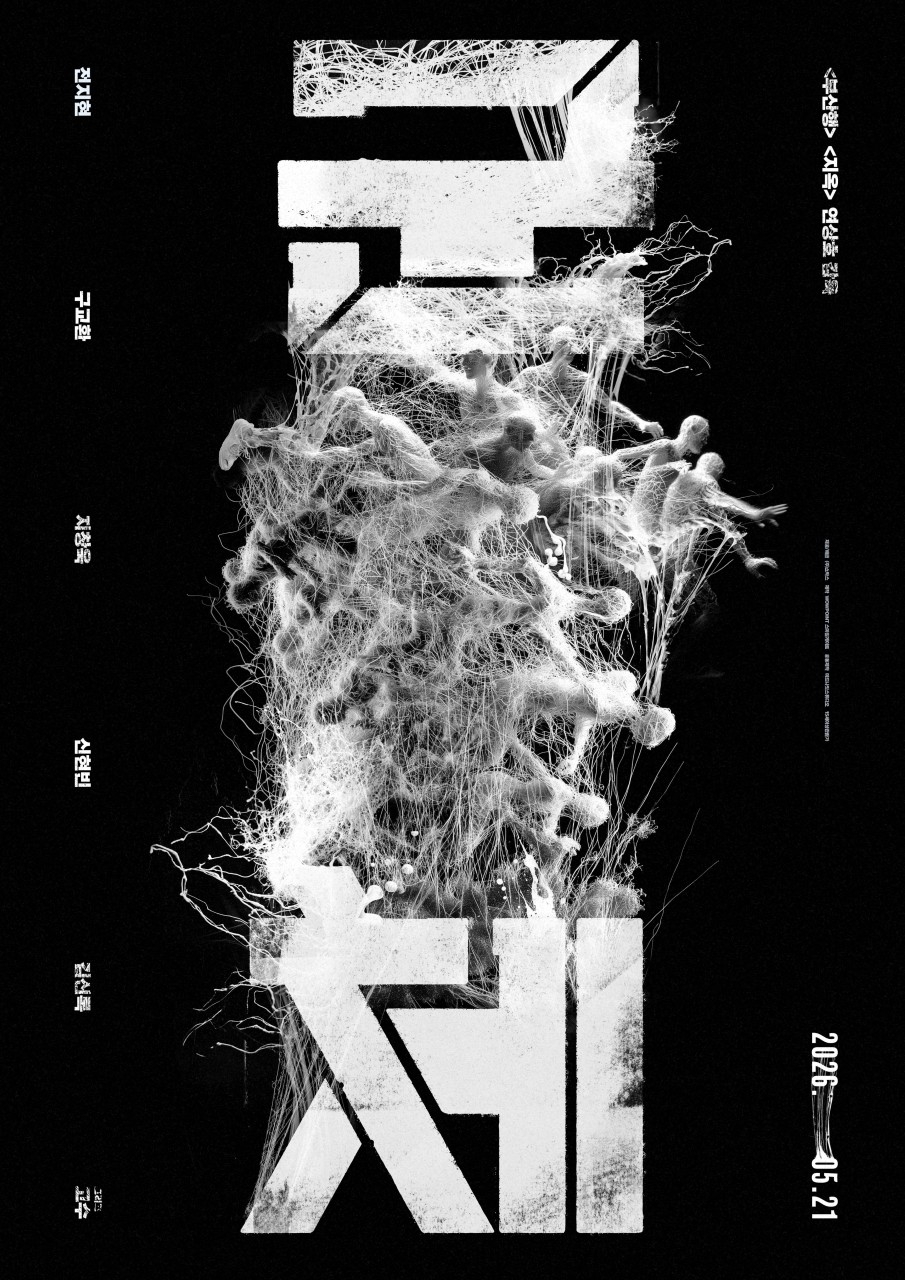
The international attention surrounding The Horde is not only about another Korean zombie project entering a major film festival. What makes the film notable is how it reflects a larger shift in the role of Korean post-production studios inside the global film ecosystem. The conversation is gradually moving away from directors and actors alone, toward the technical infrastructure that allows Korean cinema to compete at an international scale.
At the center of that shift is Dexter Studios. Its involvement in The Horde suggests that Korean genre filmmaking is increasingly being shaped by companies capable of integrating visual effects, digital color workflows, and cinematic continuity into a unified production language. That evolution matters because modern genre cinema is no longer judged only by story or performance. Audiences now evaluate immersion itself.
Korean zombie narratives are evolving beyond survival spectacle
Yeon Sang-ho built his reputation by redefining Korean zombie storytelling through Train to Busan. That film succeeded because the zombies were never merely monsters. They exposed class anxiety, selfishness, and institutional collapse within confined spaces. The emotional architecture mattered as much as the horror mechanics.
The Horde appears to continue that trajectory while pushing the visual environment into a more unstable and mutation-driven direction. The premise of survivors trapped inside a quarantined building sounds familiar on the surface, yet the emphasis on “unpredictably evolving infected” suggests a transition away from traditional outbreak cinema toward body-horror uncertainty. That distinction changes the emotional experience entirely.
Classic zombie narratives rely on recognizable rules. Infection spreads. Humans adapt. Society collapses. But when infected bodies evolve in unfamiliar ways, the story stops being about survival planning and becomes about the breakdown of human predictability itself. That creates a more psychologically disorienting kind of horror, one that depends heavily on visual execution rather than exposition.
This is precisely where VFX becomes narratively important instead of merely decorative.
Visual effects are becoming authorship, not assistance
For years, visual effects studios in Asia were often treated as invisible subcontractors within global cinema. Their work mattered technically, but not culturally. That perception has changed dramatically over the last decade.
Studios like Dexter Studios are increasingly functioning as creative partners that shape tone, pacing, realism, and emotional texture. In projects involving infection, mutation, or large-scale destruction, VFX determines whether audiences emotionally believe the world on screen. Weak effects immediately expose artificiality. Strong effects disappear into the storytelling.
The combination of VFX and DI work on The Horde is especially significant because the integration between the two disciplines often determines whether a film feels visually coherent. Digital Intermediate processes are not simply about making scenes look “better.” They control atmosphere, color psychology, spatial continuity, and emotional rhythm.
In infection horror, inconsistency can destroy tension. A creature rendered with one visual logic but lit with another breaks immersion instantly. Seamless integration matters because viewers subconsciously detect tonal fractures even when they cannot articulate them.
That is why technically polished genre cinema increasingly requires post-production houses capable of controlling the entire visual ecosystem rather than isolated effects shots.
Cannes recognition reflects changing attitudes toward genre filmmaking
The inclusion of The Horde in the Midnight Screening section at the Cannes Film Festival also reveals something larger about the current state of international cinema culture.
For decades, prestige festivals often maintained a distance from genre-heavy entertainment cinema unless it carried obvious arthouse framing. Horror, science fiction, and zombie films were frequently categorized as commercially effective but artistically secondary.
That hierarchy has weakened.
Contemporary festival audiences increasingly recognize that genre films can express social anxiety more directly than traditional dramas. Infection stories, in particular, resonate differently after years shaped by pandemics, isolation, distrust in institutions, and technological uncertainty. Audiences no longer interpret outbreak cinema as pure fantasy. The genre now operates as a framework for discussing instability itself.
Midnight Screening selections often occupy an interesting cultural space because they balance artistic experimentation with audience accessibility. Films invited there are expected to provoke reaction, not passive admiration. That makes The Horde’s selection meaningful beyond industry prestige. It suggests confidence that the film can generate collective cinematic energy on an international stage.
The Korean content industry is building technical continuity across platforms
Another important dimension is how companies like Dexter Studios are no longer confined to theatrical filmmaking. Their portfolio stretches across cinema and streaming simultaneously, which fundamentally changes production expectations.
Projects connected to platforms such as Netflix and Disney+ require a different kind of scalability. Streaming audiences consume content faster, compare productions globally in real time, and maintain lower tolerance for inconsistent visuals. A Korean production is now evaluated directly against American, Japanese, and European genre content within the same recommendation ecosystem.
That environment pressures Korean studios to maintain cinematic standards regardless of format. Series such as Squid Game, Kingdom, and Gyeongseong Creature demonstrated that Korean genre storytelling could travel internationally. But sustaining that momentum requires technical reliability as much as narrative creativity.
The more Korean studios participate in both films and streaming productions, the more they accumulate institutional expertise rather than isolated success stories. That may become one of the industry’s biggest competitive advantages over time.
Technical studios are becoming part of Korea’s cultural identity
There was a period when Korean cinema’s global reputation depended heavily on auteurs. Filmmakers like Bong Joon-ho or Park Chan-wook represented the industry internationally through distinct creative voices.
That remains true, but the ecosystem beneath those filmmakers has matured considerably. The global success of Parasite demonstrated not only narrative sophistication but also technical precision across editing, sound, production design, and post-production. International audiences increasingly associate Korean productions with consistency in execution, not merely originality.
This matters because sustainable cultural influence rarely depends on isolated artists alone. It depends on production systems capable of repeatedly delivering high-level work across multiple genres and platforms.
In that sense, studios like Dexter Studios represent a deeper industrial transformation. They are helping build a production language that international audiences recognize as distinctly Korean while still globally competitive.
The future of Korean blockbuster cinema may depend on invisible craftsmanship
One of the most interesting contradictions in visual effects work is that the better it becomes, the less audiences consciously notice it. Spectators remember emotional intensity, tension, or atmosphere rather than individual compositing techniques or color pipelines.
Yet those invisible technical choices increasingly determine whether ambitious genre storytelling succeeds at all.
Films like The Horde may ultimately reveal that Korean cinema’s next global phase will not be driven solely by storytelling originality, but by the ability to merge narrative identity with world-class technical execution. That combination is much harder to replicate than viral popularity.
The larger question is whether audiences will begin paying attention to the infrastructure behind the spectacle itself. As Korean productions become more visually ambitious, studios operating behind the scenes may become just as culturally important as the directors whose names appear on posters.
And if that happens, the future reputation of Korean cinema could depend as much on technological authorship as cinematic storytelling.